Conditions
Date: March 14, 2026
Location: Sawtooth Pass, Sierra Nevada — Elev. 9,200 ft
Temperature at Trailhead: 42°F
Temperature at Summit: 28°F
Weather: Clear at 6:30 AM. Thunderstorm hit at 11:47 AM. Lasted 47 minutes.
Wind: 25-35 mph gusts during storm
Mileage: 8.2 miles round trip
Duration: 6 hours 20 minutes on trail
I didn't plan to get caught in a storm. The forecast said "isolated afternoon showers." I've been hiking the Sierras long enough to know what that actually means — but I still packed light. The Beta LT went in my Osprey Atmos 65AG because it's my go-to shell for spring trips, and I wanted to see how it handles sustained heavy rain, not just the occasional drizzle I've been getting around Half Moon Bay.
This is not a box-fresh review. I've been wearing this jacket for 8 months and 217 miles of trail time before this trip.
The Storm
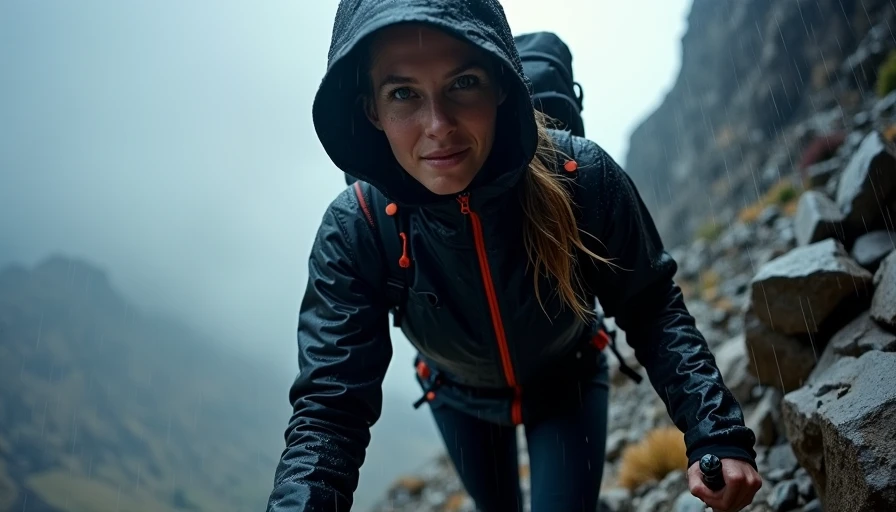
At 11:47 AM, the sky went from gray to black in about three minutes. I was half a mile below the pass, exposed on a granite slope with zero tree cover. The first drop hit like a marble. Then the wind came — 30 mph, straight into my face, carrying horizontal rain.
I zipped up the Beta LT, pulled the hood tight, and kept moving. Here's what happened over the next 47 minutes:
Waterproof Performance
First 10 minutes:The DWR coating did exactly what it's supposed to. Water beaded and rolled off. I could see it happening — the jacket looked like a lotus leaf. No wet spots forming.
10-30 minutes:The rain intensified. This is where I've seen cheaper shells start to wet out — the DWR saturates, water stops beading, and the outer fabric gets dark and heavy. The Beta LT held. The outer nylon got dark but the water still beaded. I touched the inside of the shoulder area — dry.
30-47 minutes:Sustained heavy rain. I stopped behind a rock formation for 5 minutes to check. The shoulders and hood — the areas taking the most direct impact — showed the first signs of DWR saturation. Tiny patches, maybe quarter-sized, where water stopped beading and started sitting on the fabric. But the membrane underneath held. Inside the jacket? Still dry.
Verdict:No leaks. Not one. Over 47 minutes of sustained heavy rain on exposed granite, the Gore-Tex membrane did its job. The DWR could've been better — after 8 months of use, it's clearly starting to degrade in high-wear zones. This is expected, not a defect. I'll re-DWR it before my next multi-day trip.
Breathability
This is where the Beta LT shows its limits — and where I had higher expectations going in.
At 9,200 feet, climbing a steep granite slope in a thunderstorm, I was working hard. The Beta LT kept rain out, but it also kept a lot of my sweat in. By the 20-minute mark, my base layer (Smartwool Merino 250) was damp from condensation inside the jacket. Not from rain — from my own sweat.
Is this a flaw? Partially. Gore-Tex is waterproof-first, breathable-second. The Beta LT uses standard Gore-Tex, not the more breathable Pro or Paclite+ variants. For sustained high-output climbing in wet conditions, you will build up moisture inside.
That said, the Pit Zips help. I opened them fully once the storm hit, and I could feel the difference. It's not magic — you're not going to stay bone-dry from the inside on a steep climb — but it's better than most shells in this weight class.
Verdict: Breathability is adequate for moderate activity. If you're pushing hard uphill in the rain, expect some condensation. Open the Pit Zips. Accept it. That's the trade-off for a jacket this waterproof.
Fit & Mobility
The Beta LT uses Arc'teryx's "Articulated Pattern" — which is just fancy talk for "it's cut to move with your body, not against it." I climbed a class 2 granite section during the storm (exposed, scrambling with hands), and the jacket didn't ride up, bunch, or restrict my arms. The sleeves stayed over my wrists when I reached up. The hem stayed put.
The fit is trim — not slim, not relaxed. I'm 5'7", 135 lbs, and I wear a size Small. It fits over a mid-layer comfortably. If you plan to wear a thick puffy under it in deep winter, size up. For three-season use, true to size works.
Verdict: Excellent mobility. The cut is one of the Beta LT's strongest features.
Weight & Packability
Official weight: 365g (12.9 oz) for size Small. I weighed mine on a postal scale: 368g. Close enough.
Packed down, it compresses to roughly the size of a Nalgene bottle. I stuffed it in the top lid of my pack, not in a compression sack. It came out with some creases but no damage. For reference, the Patagonia Stormfront I tested weighs 410g — so the Beta LT is genuinely lighter.
Verdict: If weight matters to you, this is hard to beat at this waterproof level.
After the Storm
The rain stopped at 12:34 PM. I took the jacket off, shook it out, and let it air-dry for 15 minutes while I ate lunch. The outer fabric dried in about 10 minutes — the DWR was still doing its job on most of the jacket, and the moisture that did absorb into the nylon evaporated quickly in the sun.
By 1:00 PM, it was dry enough to stuff back in my pack without worrying about mildew or added weight from absorbed water.
Long-Term Wear Notes (8 Months / 217 Miles)
This storm was just one data point. Here's what I've learned wearing the Beta LT over 8 months:
Durability
The face fabric is 40D nylon — thin enough to save weight, thick enough to handle brush and rock. After 217 miles, I have minor scuff marks on the right shoulder (from my pack strap) but no tears, no delamination, no seam tape failure. The zippers still run smooth. YKK Aquazip zippers are excellent — I've never had one stick or fail.
DWR Degradation
As noted above, the DWR is showing wear in high-friction zones (shoulders, upper back). This is normal after 8 months of regular use. A wash + re-DWR treatment should restore it. I'll update this review after I do that.
Color
The black looks great on the trail. It hides dirt well. It also absorbs sun — on clear days, this jacket gets warm fast. If you're mostly hiking in hot sun, consider a lighter color.
Smell
The jacket doesn't hold odors. I've worn it through sweat, rain, and campfire smoke — a quick air-out is all it needs. Unlike fleece, you don't need to wash it often, which extends the life of the DWR and membrane.
Who This Is For
Buy the Beta LT if
You want a lightweight, packable shell for three-season hiking and trail running
Weight matters to you (sub-13 oz is impressive at this quality level)
You hike in areas with unpredictable weather (Sierras, Cascades, Rockies)
You want a hood that actually works in wind
Skip it if
You need a winter mountaineering shell (get the Beta AR instead)
You want maximum breathability for high-output activity (look at eVent or Pertex Shield+ Air)
$599 is outside your budget (see alternatives below)
Alternatives Worth Considering
Jacket | Weight | Price | When to Choose It
Patagonia Torrentshell 3L | 340g | $149 | Budget pick. Surprisingly good for the price. DWR fades faster.
REI Co-op Stormbolt 2 | 383g | $179 | Best value. Gore-Tex at a REI price. Slightly heavier.
Arc'teryx Beta AR | 475g | $699 | More durable face fabric (80D). For bushwhacking and mountaineering.
Outdoor Research Ascendant | 317g | $250 | Lighter, more breathable. Less waterproof in sustained heavy rain.
The Bottom Line
The Arc'teryx Beta LT earned its place in my pack during that Sierra storm. It kept me dry for 47 minutes of sustained heavy rain at 9,200 feet with 30 mph winds. The hood is excellent. The fit is precise. The weight is right.
It's not perfect — breathability under high output is mediocre, and the DWR needs maintenance after several months. But no rain shell is perfect. The Beta LT makes the right trade-offs: maximum waterproof protection at minimum weight, with a fit that actually works on the move.
At $599, it's an investment. But after 8 months and 217 miles, I'd buy it again.
Rating: 8.5 / 10
Gear up. Get out.
No comments yet — be the first to share a thought.