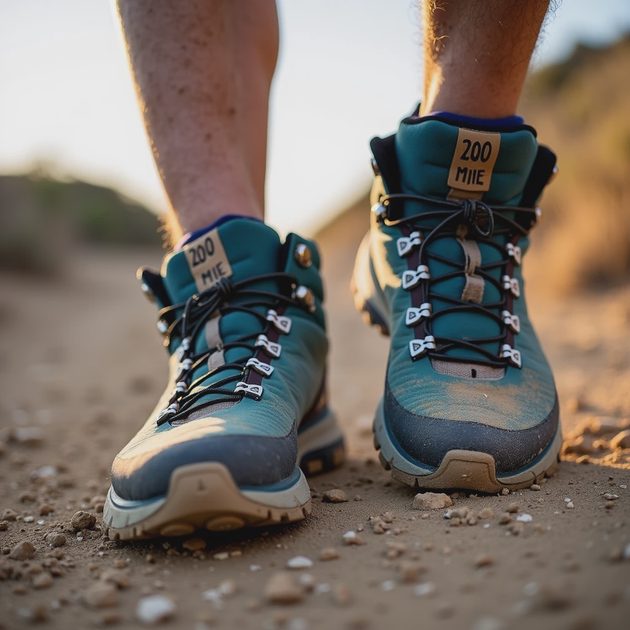
I bought the Salomon X Ultra 4 GTX in October 2024, the day after my old Merrell Moabs finally gave up — sole separating from the upper like a jaw unhinging, flapping on the trail, done. I walked into REI, tried on six pairs of boots, and chose the Salomons mostly because they fit my wide feet without making me size up. I paid $165. I didn't read reviews first. I just needed something that worked.
Twenty months and roughly 200 trail miles later, they're still on my feet. The soles are cracking. The tread is balding in patches. The waterproof membrane gave up at mile 160. And yet — I'm not disappointed. Here's the full autopsy.
The Specs (For Reference)
Model: Salomon X Ultra 4 GTX (women's)
Weight: 13.2 oz per shoe (women's 8.5)
Stack: 11mm drop (22mm heel, 11mm forefoot)
Membrane: Gore-Tex
Outsole: Contagrip MA
Lacing: Quicklace system
Upper: Synthetic with welded overlays
Price paid: 165
Mile 0–50: The Honeymoon
Out of the box, these boots felt like trail runners that wanted to be hikers. Lightweight, flexible forefoot, no break-in period. I wore them on a 6-mile shakedown hike in Los Padres — dry trail, 55°F, 1,500 feet of gain — and forgot I was wearing new boots. That almost never happens.
The Quicklace system got mixed reviews from me early. It's fast. One pull tightens the whole thing. But the lace pocket on the tongue — a tiny pouch where you tuck the excess cord — feels like an afterthought. On multiple occasions I tucked the lace in, only to have it pop out mid-stride and slap against my ankle for the next mile. I solved this by stuffing the excess under the crossed laces instead of the pocket. Problem solved. But why ship a feature that doesn't work?
The Contagrip outsole gripped dry rock and packed dirt well. I took them up a granite scramble in Point Reyes and never slipped. The tread pattern is aggressive enough for loose dirt but not so deep that it feels clunky on hardpack. Good balance.
First 50 miles verdict: Comfortable, grippy, fast-feeling. One annoyance (the lace pocket). No durability concerns yet.
Mile 50–100: Rain, Mud, and the First Scuff
This is the stretch where I took the Salomons through a proper Sierra weekend — two nights, 22 miles, rain on day two, mud on day three.
The waterproofing held up perfectly. Creek crossings up to ankle depth, wet grass, muddy switchbacks. My socks stayed dry. The Gore-Tex membrane breathed well enough that my feet didn't feel like they were in a sauna — though at 70°F and sunny, I did wish I'd brought the non-GTX version. That's not a failure of the boot. That's me choosing the wrong version for the conditions. For cold rain and wet mud, the GTX did its job.
The toe cap took its first real hit on a granite step — a visible scuff on the rubber rand, but no separation. The synthetic upper shed mud easily. A quick rinse in a stream and they looked mostly clean.
Notable at mile 80: The insole started to flatten. Not a dealbreaker, but noticeable on long descents. I swapped in a pair of Superfeet Trailblazer insoles ($50) and the arch support improved measurably. If I were recounting the true cost of these boots, I’d add $50. The stock insole is fine for short hikes. For anything over 10 miles, it’s underwhelming.
Mile 100–150: The Tread Starts to Go
At mile 120, I noticed the first sign of meaningful wear: the tread lugs under the ball of my foot were visibly shallower than the edges. Not bald — but thinning. The Contagrip rubber is on the softer side, which explains the good grip on rock but also the faster wear rate. If you're hiking primarily on abrasive granite and sandstone, expect the outsole to show wear by mile 100.
The heel tread was holding up better — I don't heel-strike heavily, so the rear lugs were still close to original depth. But the midfoot and forefoot were clearly wearing faster.
The upper, meanwhile, looked almost new. The welded overlays were doing their job — zero delamination, zero tearing at flex points. The toe cap rubber was scuffed from repeated granite contact but still firmly attached. The heel counter was solid. No stitching had come loose.
At mile 140: A small crack appeared on the medial side of the right sole, just behind the ball of the foot. It was hairline — maybe 3mm long — and didn't go through the full sole thickness. I kept hiking on it. It didn't spread immediately. But it was the first sign that the sole unit might have a lifespan.
Mile 150–200: The Crack Widens, the Membrane Fails
At mile 160, two things happened on the same hike.
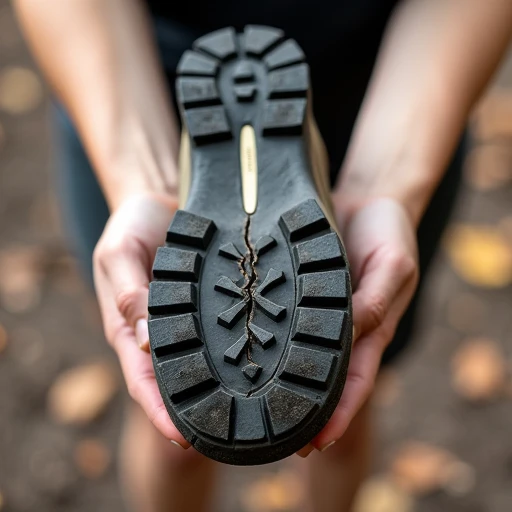
First, the crack. The hairline split on the right sole had grown — now about 12mm long, deeper, and clearly visible when the boot flexed. A second smaller crack appeared on the left sole in roughly the same position. Both cracks follow the flex point of the sole, right where the forefoot bends during a stride. This is a stress fracture, not impact damage. The Contagrip rubber appears to have a flex-life limitation. After roughly 150 miles of repeated bending, it starts to split.
Are the cracks causing problems yet? Yes and no. In dry conditions, I don't notice them. The sole still grips, the boot still flexes, the cracks don't catch on anything. But in wet conditions, the right crack is deep enough that water seeps in from underneath. Which brings me to the second thing.
Second, the membrane failure. At mile 160 — crossing a shallow stream I'd crossed a dozen times before — my right sock got wet. Not soaked, but damp at the toes. I checked the upper. No holes. Checked the tongue. Dry. Then I flexed the boot and watched water push up through the crack in the sole. The Gore-Tex membrane, which sits above the sole unit, was now exposed to water from below.
This isn't a Gore-Tex failure. It's a sole failure that compromises the waterproofing. The membrane itself hasn't delaminated or torn — but it can't do its job when the sole separating beneath it creates a direct path for water.
At mile 200: The tread is definitely balding under the forefoot. The lugs that were 4mm deep are now maybe 1.5mm deep at the wear point. The heel still has decent tread. The soles are cracking but still intact. The uppers are in remarkably good condition — dirty, scuffed, but structurally sound. The Quicklace system still works, though the cord shows some fraying where it rubs against the hardware.
What Held Up
The upper. Synthetic welded construction, no delamination, no tears at flex points. This upper could easily go another 200 miles. Whatever Salomon is doing with their overlay welding, it's holding.
The toe cap. Scuffed, gouged in one spot from a sharp granite edge, but still full coverage. No separation from the upper.
The heel counter. Solid. No collapsing, no internal wear. My heels don't slip, and the back of the boot hasn't deformed.
The ankle collar padding. Still plush. Still comfortable. No fabric wearing thin at the Achilles.
The Quicklace hardware. The metal eyelets and the locking mechanism still work perfectly. The cord is fraying slightly but hasn't snapped.
What Didn't
The outsole durability. 200 miles to significant wear is below what I'd expect from a $165 boot. For comparison: my Merrell Moabs went 350 miles before the soles showed similar wear, and those cost $50 less. The softer Contagrip compound trades longevity for grip. For some hikers, that's worth it. For others — especially those on abrasive terrain — it's a hidden cost.
The insole. Flattened to near-uselessness by mile 80. Budget an extra $50 for aftermarket insoles if you have any arch at all.
The lace pocket. A design annoyance that I fixed with a workaround. Not a functional failure, but a detail that should have been caught in testing.
The sole cracking. This is the one that raises questions about long-term reliability. A sole that cracks at 150 miles might delaminate at 250. I'll keep wearing these and report back, but the cracking pattern suggests the flex point is a design weakness.
The waterproofing (cascading failure). The Gore-Tex membrane didn't fail — but it became unusable because the sole beneath it failed first. For a waterproof boot, this is a distinction without a difference. If water gets in, the boot isn't waterproof.
Who These Are For
Buy the Salomon X Ultra 4 if:
You want a lightweight, fast-feeling hiker that feels more like a trail runner
You hike primarily in dry conditions or don't need long-term waterproofing
You value grip on rock and packed dirt over outsole longevity
You have wide feet — the fit is accommodating while still locked in
You're willing to swap the insole and manage the lace pocket
Don't buy these if:
You hike mostly on abrasive granite, lava rock, or sandstone — the outsole will wear fast
You need true waterproofing beyond 150 miles
You want a boot that'll go 400+ miles without major wear
You prioritize durability over weight and agility
The Bottom Line
At 200 miles, the Salomon X Ultra 4 GTX is a boot of contradictions. The upper is excellent — durable, comfortable, well-built. The outsole is disappointing — soft, fast-wearing, and now cracking at the flex point. The waterproofing worked until the sole failed. The insole was a placeholder from day one.
I don't regret buying them. They're the most comfortable hiking boots I've owned, and for day hikes in dry conditions, I still reach for them. But I can't recommend them for multi-day trips where wet feet would be a safety issue, and I can't pretend the outsole longevity is acceptable for the price.
If Salomon puts a harder rubber compound on the next version — or reinforces the sole's flex point — these could be the best lightweight hikers on the market. Until then, they're a great boot with a known expiration date.
I'll keep hiking in them until the sole cracks through or the tread wears completely smooth. Current estimate: 250–300 miles max. For 165,that′s165,that′s0.55–$0.66 per mile. Not terrible. But not great.
If you've got a pair of X Ultra 4s with similar mileage, I want to hear from you. Same cracks? Same tread wear? Or did yours hold up better? The trail doesn't care about my sample size of one.
Gear up. Get out.
No comments yet — be the first to share a thought.