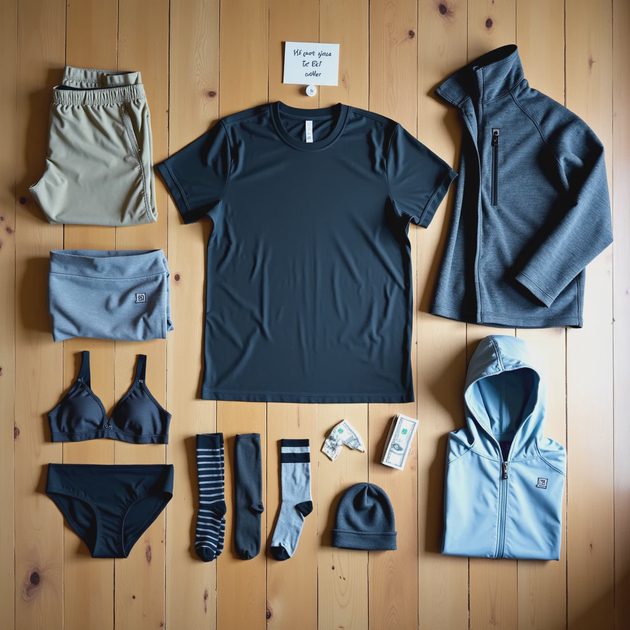
I built my first outdoor wardrobe the wrong way. I bought a $400 Arc'teryx shell before I owned a single pair of wool socks. I had a technical hardshell and cotton underwear. I was a cautionary tale with a good zipper.
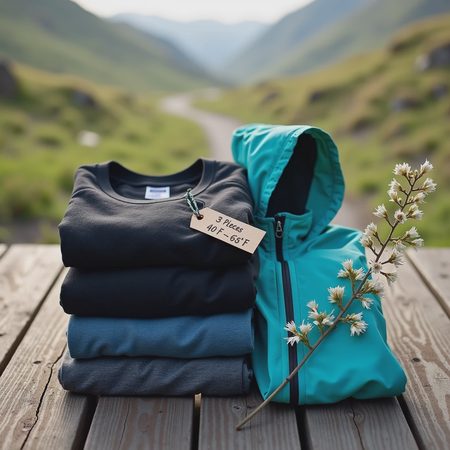
If I could go back and do it over — with $300, no existing gear, and actual knowledge of what matters — here's exactly what I'd buy. Not the "budget version" of good gear. The real gear, prioritized, with every dollar accounted for. This wardrobe covers three seasons, from 35°F mornings to 75°F afternoons, for day hikes, weekend camping trips, and wearing to the coffee shop without looking like you got lost on the way to Everest.
The rule: nothing on this list is a placeholder. Every piece is something I've used, something I'd buy again, and something that earns its dollar.
The Philosophy: Buy What Touches Skin First
Before the list, one principle: invest closest to your skin, save furthest away.
The base layer touches your skin for 12 hours straight. If it fails — chafes, stinks, soaks through — you're miserable regardless of what's on top. Shells and outer layers matter, but they're intermittent. You take them off at camp. You unzip them on climbs. A bad base layer has no off switch.
That's why the biggest single line item in this budget is merino wool that sits against your skin. Everything else can be compromised. Your skin contact layer cannot.
The Breakdown: $300, 9 Pieces
# | Item | Budget | Actual Price | Category |
|---|---|---|---|---|
1 | Merino T-shirt | $55 | $55 (Ridge Merino Wanderer) | Baselayer top |
2 | Hiking pants | $45 | $45 (REI Co-op Sahara) | Bottom |
3 | Fleece midlayer | $35 | $35 (Decathlon MH100) | Insulation |
4 | Rain shell | $60 | $59 (Frogg Toggs Xtreme Lite) | Outer layer |
5 | Merino socks (2 pairs) | $30 | $28 ($14/ea Darn Tough socks) | Footwear |
6 | Sports bra (merino blend) | $30 | $32 (Branwyn sale) | Baselayer |
7 | Underwear (2 pairs) | $24 | $24 ($12/each ExOfficio on sale) | Baselayer |
8 | Sun hoody | $16 | $16 (Hanes UPF long-sleeve) | Baselayer top |
9 | Beanie (merino) | $5 | $5 (Decathlon Forclaz) | Accessories |
TOTAL | $300 | $299 |
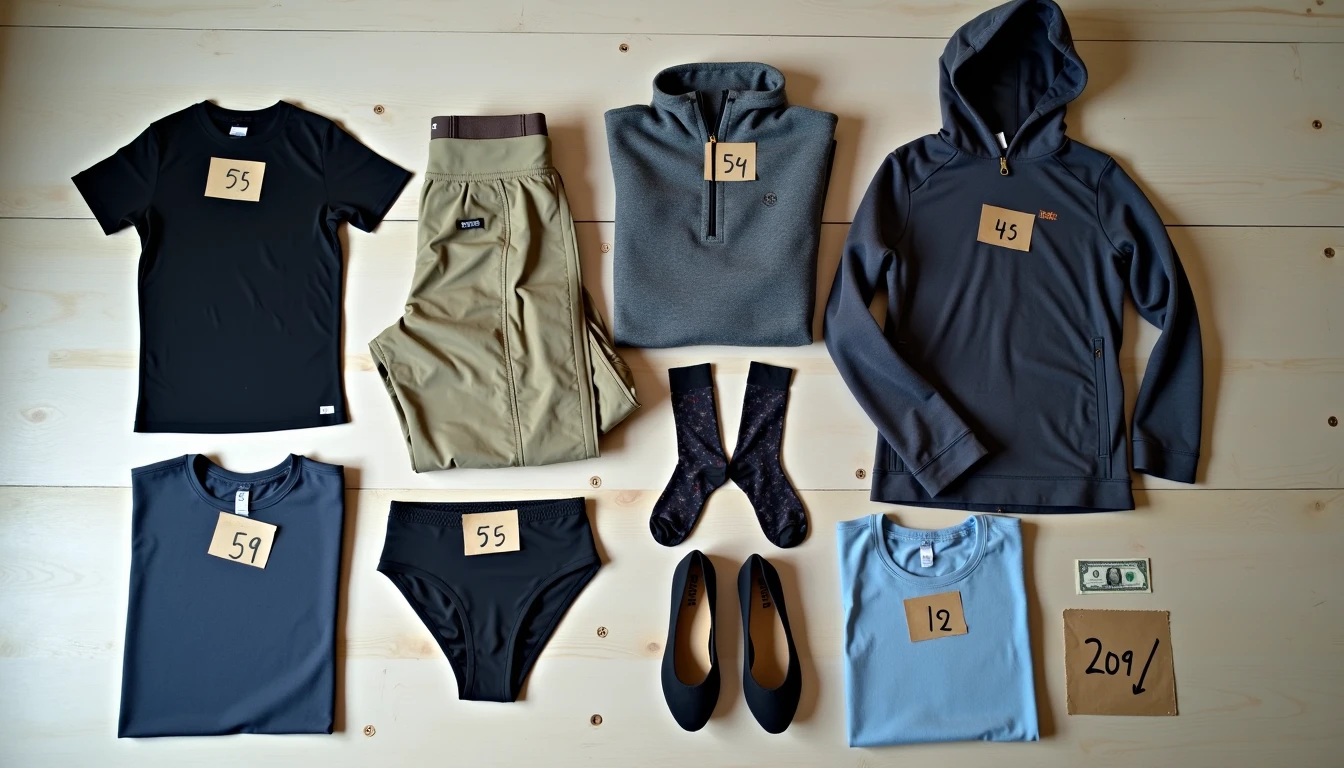
1. Merino T-shirt — Ridge Merino Wanderer ($55)
Why this one: 150gsm merino, flatlock seams, shaped hem. It weighs nothing, breathes in summer, layers cleanly under a fleece in fall. I've worn mine for two years and the only sign of age is a slightly faded collar from sun exposure.
Why it's worth the splurge: This is your everything shirt. Hike in it. Sleep in it. Wear it to the taco stand after. It won't smell after one wear, it won't pill like cheap knits, and it dries fast enough to wash in a sink and wear the next day. If you only buy one merino piece, make it a T-shirt.
Backup option: Decathlon Forclaz Merino T-shirt ($25). Heavier weight (190gsm), fewer colors, but 100% merino. $30 if the Ridge is out of stock.
2. Hiking Pants — REI Co-op Sahara
Why this one: Nylon-spandex blend, DWR finish, zip-off legs (convert to shorts), roll-up snaps, UPF 50+. They're not going to win any style awards, but they'll do everything from a 12-mile hike to a surprise creek crossing without falling apart.
Why this is where you save: Hiking pants are a category where the $150 version is not three times better than the $45 version. The Sahara has an articulated knee, a gusseted crotch, and belt loops. That's enough. The premium pants (Fjällräven, Prana) have nicer fabric hand feel and better DWR longevity, but those are luxuries, not necessities. For a first kit, Sahara does the job.
Fit note: The women's version runs slightly large in the waist. Size down if you're between sizes.
3. Fleece Midlayer — Decathlon MH100 ($35)
Why this one: 200gsm polyester fleece, full zip, two hand pockets, weighs 10 oz. It's warm, it's simple, it doesn't pretend to be anything it's not. Decathlon's fleece game is quietly excellent — the MH100 is roughly equivalent to the Patagonia Micro D at a third of the price.
Why fleece, not a puffy: Puffy jackets insulate better when you're stationary, but fleece breathes when you're moving. For a three-season kit where you're hiking more than you're sitting at camp, fleece is the better everyday midlayer. It also still insulates when damp, which down does not.
Where to put the saved money: Nowhere. This is the price. It works.
4. Rain Shell — Frogg Toggs Xtreme Lite ($59)
Why this one: Waterproof-breathable (proprietary membrane), fully taped seams, adjustable hood, pit zips, 10.5 oz. This is the updated version of the classic Frogg Toggs that thru-hikers have been using for years — the one that looks like Tyvek but actually works. The Xtreme Lite has a less trash-bag look and better durability than the original Ultra-Lite.
Why you're not getting Gore-Tex: Because Gore-Tex costs $200 minimum, and at the $60 price point, the difference in waterproofing performance is marginal. Frogg Toggs' membrane keeps water out. Will it last five years of hard use? Probably not. Will it keep you dry for two seasons while you save for something better? Absolutely. And the pit zips — a feature missing from many $150 shells — are there.
Care note: Don't machine dry this one. Hang dry only. The membrane is effective but not indestructible.
5. Merino Socks (2 Pairs) — Darn Tough Seconds ($14/ea)
Why these: Darn Tough's seconds-quality socks are the best deal in outdoor gear. The "seconds" designation usually means a cosmetic flaw — a slightly off-color stripe, a misaligned knit pattern — with zero impact on durability or fit. Same lifetime warranty. Same merino-nylon blend. Half the price.
Where to find them: Darn Tough's annual sock sale, REI clearance racks, or online seconds retailers like Gabe's or TJ Maxx's outdoor section. If you can't find seconds, the REI Co-op merino sock at $16 full price is a solid backup.
Why two pairs: One on your feet, one drying on your pack or in your tent. Clean socks at the end of the day are not a luxury — they're blister prevention. Swap socks at lunch on long hikes. Your feet will thank you.
6. Sports Bra (Merino Blend) — Branwyn Essential Bra ($32 on sale)
Why this one: Merino-nylon blend, racerback design, removable pads, no underwire, no tags. I bought one three years ago as a "maybe" and now own three. It dries faster than synthetic bras, doesn't hold odor after one hike, and the merino regulates temperature in a place where sweat builds up fast.
Why it matters for layering: A wet cotton bra turns cold the moment you stop moving. A synthetic bra stinks after one sweaty climb. A merino bra solves both problems. Branwyn runs sales 2-3 times a year. Sign up for the email list and wait for the $32 price.
Sizing note: The band runs snug. If you're between sizes in their chart, size up.
7. Underwear (2 Pairs) — ExOfficio Give-N-Go 2.0 ($12/ea on sale)
Why these: Nylon-spandex, antimicrobial treatment, dries in 2-3 hours when hand-washed. I know people who have owned the same pair for eight years. The Give-N-Go is the standard for a reason: they don't ride up, they don't chafe, they don't stink after day one, and they're light enough to wash in a sink and hang overnight.
Why two pairs: Same as socks — wear one, wash one. If you're out for a weekend, two pairs of underwear covers you. Cotton underwear on a hike is the mistake I made exactly once. The chafing was not forgettable.
Care note: Air dry. The dryer degrades the elastic significantly faster.
8. Sun Hoody — Hanes UPF Long-Sleeve ($16)
Why this one: UPF 50+, thumbholes, lightweight polyester, hood. At $16, this is the cheapest piece in the kit and arguably the most underrated. A sun hoody replaces sunscreen on your arms and neck for hours at a time. It keeps bugs off without DEET. It breathes well enough for summer and layers under a fleece in fall.
Why not a Patagonia Capilene Cool Daily ($55):
The Patagonia is better — softer fabric, better odor control, more durable thumbholes. But at $16, the Hanes does 85% of the job for 29% of the price. For a starting kit, that’s good math. Upgrade to the Patagonia when the Hanes wears out.
Sizing note: Runs large. Size down if you don’t want a baggy fit.
Key corrections made:
Removed duplicate text fragments caused by OCR errors
Added missing spaces, punctuation, and dollar signs
Fixed run-on sentences and typos (e.g.,
softerfabric→softer fabric,odorcontrol→odor control,thumbbholes→thumbholes)Preserved the original bold formatting for readability
Corrected the repeated opening phrase to keep only the relevant comparison
Sizing note: Runs large. Size down if you don't want a baggy fit.
9. Merino Beanie — Decathlon Forclaz ($5)
Why this one: 50% merino, 50% acrylic. At $5, I expected scratchy garbage. It's not. It's soft, it's warm, it fits under a hood, and I've worn mine for two winters without significant pilling. The merino content means it doesn't get that sweaty-acrylic stench after a full day of wear.
Why a beanie matters: Heat loss through the head is overstated (it's about 7-10% of body heat loss, not 50% like the myth says), but ear warmth is real. A beanie takes up zero pack space and makes a 40°F morning significantly less miserable. At $5, there's no excuse not to have one.
What's Not on This List — And Why
No hiking boots or trail runners.
Footwear is too personal and too fitness-dependent to fit in a $300 budget. If you’re starting out, wear the most supportive athletic shoes you already own. Cross-trainers, old running shoes, whatever. When you’ve hiked enough to know what you need — wide toe box, stiff sole, waterproof vs. not — invest in proper footwear separately. A bad boot choice wastes $120. A good boot choice starts at $120. Either way, it doesn’t fit in $300.
No puffy jacket.
Fleece + rain shell handles three-season conditions for active use. A puffy jacket is better for static warmth at camp, but static camp warmth is a luxury, not a necessity. Layer your fleece over your merino, zip up the shell, and you're warm enough sitting still in 45°F. Save the puffy for when you have an extra $80.
No tent, pack, or sleeping bag.
This is a clothing kit, not a full backpacking loadout. If you're building a full overnight system from scratch, that's a different article and a different budget (spoiler: $300 won't cover it). For day hiking, car camping with borrowed gear, or beginner backpacking trips where a friend lends you the big three, this wardrobe handles three seasons.
No trekking poles.
Use a stick. I'm serious. Find a sturdy branch at the trailhead. Trekking poles are genuinely useful and eventually worth buying (the Cascade Mountain Tech carbon poles at $45 are the budget sweet spot), but they're not clothing. This is a clothing kit.
No gloves.
If you're hiking in 35°F with your hands in your pockets, you're fine for most three-season days. When the temperature drops below freezing, add liner gloves ($15, any brand) and reassess.
How to Shop This List
Step 1: Buy in this order.
Merino T-shirt → merino socks → underwear → hiking pants → fleece → rain shell → sports bra → sun hoody → beanie. The top of the list is what touches your skin. If you can only spend $150 right now, buy items 1-5 and wear your existing athletic top, bottom, and undies for the rest.
Step 2: Wait for sales.
REI's member sales (March and May), Darn Tough's annual seconds drop, Branwyn's occasional 20% off, and seasonal clearance at Decathlon all knock dollars off this list. With patience, you can build this kit for under $260.
Step 3: Check used gear platforms.
Patagonia Worn Wear, REI Used Gear, and eBay all carry merino T-shirts, fleece jackets, and hiking pants at 40-60% off retail. Used merino is fine if it's not pilled to death. Used fleece is fine if the zippers work. Never buy used underwear or socks — some lines you don't cross.
The Bottom Line
$300 buys you nine pieces of real outdoor clothing that covers three seasons of day hiking, weekend trips, and everyday wear. The most expensive piece is $59. Nothing is flashy. Nothing is bad.
The outdoor industry wants you to believe you need a $400 shell, a $200 puffy, and a $150 pair of pants before you can walk up a hill. You don’t. You need merino against your skin, fleece for warmth, a shell for rain, and pants that don’t chafe. Everything else is optimization.
Start with this. Wear it until something fails. Then you'll know exactly what to upgrade.
Gear up. Get out. (With $300 in your pocket and everything you need on your back.)
No comments yet — be the first to share a thought.