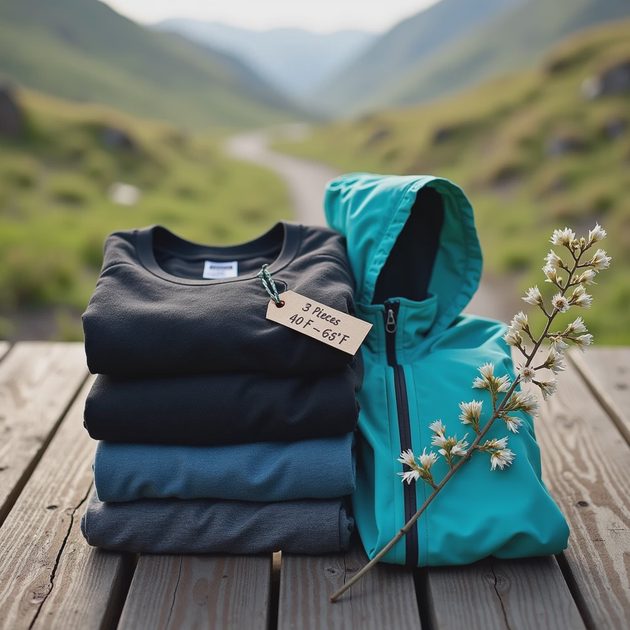
Spring in the outdoors is a liar. You start at 42°F in fog so thick you can't see the trailhead sign. By 11 a.m., you're down to a T-shirt, sweating through a climb. By 3 p.m., the wind picks up and you're cold again. By sunset, you're shivering in camp wondering how the same day contained four seasons.
I've been doing this long enough that I no longer pack a different outfit for every possible temperature. I pack three pieces that work together. That's it. Three pieces that layer, mix, and adapt to a 25-degree swing without making me carry a full wardrobe.
Here's the system.
The Three Pieces
Piece | What It Does | Example | Weight |
|---|---|---|---|
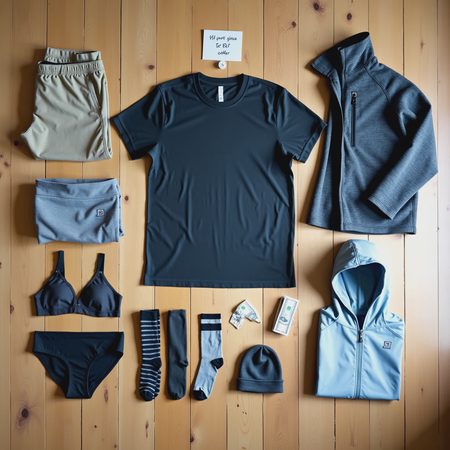
Merino base layer | Wicks sweat, resists odor, regulates temp | Ridge Merino Wanderer T-shirt (150gsm) | 5.2 oz |
Lightweight fleece | Breathable warmth, dumps heat when unzipped | Decathlon MH100 1/4-zip | 7.1 oz |
Packable wind shell | Blocks wind, sheds light rain, packs to nothing | Patagonia Houdini | 3.7 oz |
Total weight | 16 oz (1 lb) |
That's one pound for a three-season layering system that handles everything from a cold coastal start to a sunny afternoon summit.
How the System Works
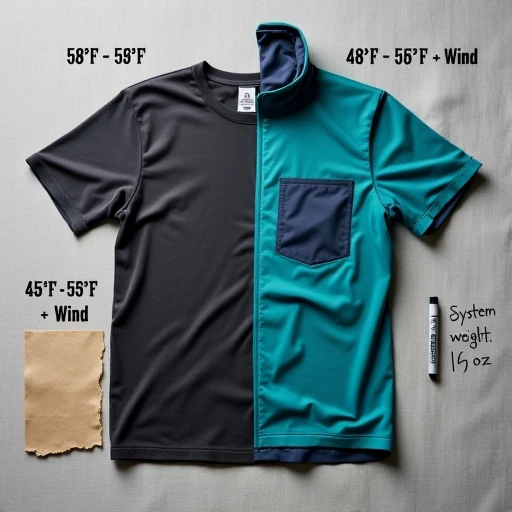
Three pieces, four configurations. Here's what you wear and when.
Configuration 1: Merino Only — 58°F to 65°F
You're moving, the sun is out, and you're working hard enough to generate your own heat. The merino T-shirt is the only layer you need.
The Ridge Merino Wanderer is 150gsm — lightweight enough to breathe in warm weather but substantial enough that you don't feel naked when the breeze picks up. Unlike cotton, it won't turn into a damp, cold rag the moment you stop sweating. The merino fibers pull moisture off your skin and release it into the air. You stay dry. You stay comfortable.
If your merino T-shirt is a darker color (mine is black), you'll feel the sun a bit more. If it's a lighter color, you'll reflect more heat. Either works for spring. Just know that black merino in direct 65°F sun with no wind feels about 5 degrees warmer than light grey merino in the same conditions.
Bottom line: This is your warm-weather hiking uniform. Don't overthink it.
Configuration 2: Merino + Fleece — 48°F to 58°F
The morning is cool, the fog hasn't burned off yet, or you're on a shaded north-facing slope. Pull the fleece on over your merino.
The Decathlon MH100 is a basic 200gsm polyester fleece with a 1/4-zip. It costs $15. It weighs 7 ounces. It's not fancy, but it does exactly what a fleece should do: traps warm air in its loft while letting moisture vapor escape. When you heat up on a climb, unzip the front and the excess heat dumps out. Zip it back up at the ridgeline when the wind hits. It's active insulation at its simplest.
The 1/4-zip matters here. Full-zip fleeces are heavier and bulkier. A pullover with a deep front zip gives you 80% of the venting with 20% less weight and zero zipper-bunch at the waist when you sit. For spring layering, the 1/4-zip is the sweet spot.
When to take the fleece off: If you're climbing hard in direct sun and the temperature is above 55°F, you'll probably overheat in this configuration. Tie the fleece around your waist or stuff it in a side pocket. You'll want it back at the summit.
Configuration 3: Merino + Wind Shell — 45°F to 55°F with Breeze
This is the configuration that surprises people. A wind shell seems too thin to matter. But wind chill is real, and blocking it changes everything.
The Patagonia Houdini weighs 3.7 ounces and packs down to the size of a lime. It has no insulation — just a thin nylon ripstop face fabric with a DWR coating. Over a merino base layer, it traps your body heat by preventing wind from stripping it away. The effect is immediate: put the Houdini on in a 15-mph breeze at 50°F and you'll feel 8-10 degrees warmer within a minute. That's not marketing. That's physics. Wind removes the thin layer of warm air your body creates next to your skin. Stop the wind, keep the heat.
Ideal use case: Ridgelines, exposed passes, coastal trails where the breeze never stops, and any situation where you're working hard enough to generate body heat but the wind keeps stealing it.
What it doesn't do: Insulate when you're stationary in cold weather. That's where the fleece comes in.
Configuration 4: Merino + Fleece + Wind Shell — 40°F to 48°F
Full system deployed. This is your cold morning, pre-dawn start, or windy summit configuration.
The layers work from inside out:
Merino pulls moisture off your skin
Fleece traps warm air and lets moisture vapor pass through
Wind shell blocks wind and traps the whole system's heat
You can hike in this configuration comfortably down to about 40°F if you're moving. Below 40°F, you'd want a heavier fleece or a light puffy instead of the wind shell. But for spring conditions in most of the country, this three-piece system covers your coldest start.
The venting trick: Keep the fleece 1/4-zip partially open and the wind shell fully unzipped. This lets you regulate heat without removing layers entirely. When you stop, zip everything up. When you move again, crack the vents. It's a breathable system if you actively manage it.
Why This Beats a Puffy for Spring
Most people reach for a puffy jacket when the temperature drops. For spring hiking, I don't.
A puffy jacket (down or synthetic) is designed for static warmth — sitting at camp, standing on a summit, sleeping in your bag. It's too warm for active use above 40°F. You'll overheat in ten minutes of hiking, take it off, and then be cold again when you stop. Puffies are binary: on or off. There's no middle setting.
A fleece is analog. You can wear it partially unzipped. You can push the sleeves up. You can adjust it in degrees. For spring conditions with wide temperature swings, you need a layer that works across a range, not a layer that's only comfortable at one end of it.
The wind shell adds the missing piece: wind protection without insulation. Together, fleece + wind shell gives you more adjustability than a single puffy at roughly the same weight. My Decathlon MH100 fleece (7.1 oz) plus Patagonia Houdini (3.7 oz) is 10.8 ounces total. A typical lightweight down puffy is 8-11 ounces. The difference is that my system works across a 25-degree range, while the puffy only works when you're cold and not moving.
Save the puffy for winter. Or bring it as a camp layer. But for spring day hikes, these three pieces are the better tool.
How to Pack This System
Wear at the trailhead:
Merino T-shirt (always on)
Fleece over it (if below 50°F)
Wind shell on top or stuffed in a side pocket
In your pack:
The wind shell (if not already wearing it) — stuffs into its own chest pocket, size of a lime
The fleece (if you took it off mid-hike) — tie around waist or stuff loose in pack
Nothing else. You don't need a backup shirt. You don't need a second midlayer. The merino won't stink after one day, and the fleece will dry on your body if it gets damp.
Total clothing in pack: 0 to 7 ounces depending on what you're wearing.
Total decision fatigue: Zero. You only have three pieces. You can't overpack because there's nothing else to bring.
What If You Run Cold or Hot?
Everyone's thermostat is different. Here's how to adjust the system.
If you run cold:
Swap the 150gsm merino T-shirt for a 200-250gsm merino long-sleeve. Adds 3-4 ounces and about 5°F of warmth at the low end.
Swap the lightweight fleece for a grid fleece like the Patagonia R1 Air ($99, 12 oz). Heavier but warmer and more breathable.
Swap the Houdini wind shell for a softshell like the Outdoor Research Ferrosi ($99, 11 oz). More durable, more water-resistant, slightly insulated.
Adjusted system range: 35°F to 60°F. Adjusted weight: roughly 22 ounces. Still reasonable.
If you run hot:
Use a lighter merino T-shirt (130gsm, like the Icebreaker Tech Lite II).
Keep the Decathlon MH100 fleece — it's already on the lighter side.
Consider skipping the wind shell entirely for dry, calm days. Merino + fleece handles 45°F to 65°F for warm runners.
Adjusted system range: 45°F to 70°F. Adjusted weight: roughly 12 ounces. Almost nothing.
The Piece-by-Piece Breakdown
Merino Base Layer: Ridge Merino Wanderer ($55)
150gsm merino wool, flatlock seams, shaped hem. I've worn mine for two years and it's held up better than Icebreaker shirts I paid more for. The fit is trim but not compression-tight — enough room to move without excess fabric bunching under the fleece. Colors are limited (black, grey, a dark green) but that's fine. You're layering over it.
Alternatives:
Budget: Decathlon Forclaz Merino T-shirt ($25, 190gsm) — heavier but half the price
Splurge: Icebreaker Tech Lite II ($80, 130gsm) — lighter, more colors, offset shoulder seams for backpack comfort
Lightweight Fleece: Decathlon MH100 1/4-Zip ($15)
200gsm polyester fleece, 1/4-zip, two hand pockets, 7.1 ounces. At $15, this is the best value fleece I've found. It's not technical. It's not stylish. It's a fleece. It does fleece things. I've had mine for three years and the only wear is slight pilling on the back from pack friction.
Alternatives:
Budget: You're already at the budget option. There's nothing cheaper worth buying.
Splurge: Patagonia Micro D 1/4-Zip ($59, 8.5 oz) — softer, better fit, recycled materials, more durable
Wind Shell: Patagonia Houdini ($109)
3.7 ounces, packs into its own chest pocket, DWR-coated ripstop nylon. The Houdini is famously breathable for a wind shell — it lets enough air through that you don't feel clammy during activity. That's the tradeoff: it's not fully windproof, but it's breathable enough to hike in. For spring layering, that's the right trade.
Alternatives:
Budget: Decathlon FH500 Windbreaker ($20, 4.2 oz) — slightly heavier, less breathable, still blocks wind
Splurge: Arc'teryx Squamish ($159, 4.9 oz) — more durable, better hood adjustment, slightly less breathable than Houdini
Seasonal Add-Ons (Not Required, But Nice)
This three-piece system works for about 80% of spring days. For the other 20%, here's what I add without breaking the system.
Add a light beanie ($5-15, 1-2 oz). If your spring hiking involves pre-dawn starts or ridgelines in the wind, a merino beanie adds surprising warmth. Your head is only 7-10% of your body's heat loss (not 50% like the myth), but cold ears are miserable and a beanie fixes that in seconds. Stuffs into a pocket.
Add liner gloves ($10-20, 1-2 oz). For mornings below 40°F or windy passes. Hands in pockets work for a while. Liner gloves work better. They weigh less than a granola bar.
Swap the Houdini for a rain shell if rain is forecast. TThe Patagonia Torrentshell 3L ($179, 11.4 oz) or the Frogg Toggs Xtreme Lite ($59, 10.5 oz) replaces the wind shell in the system. You lose a little breathability, but you gain actual waterproofing. This configuration will handle spring rain and still cover the 40°F–60°F range.
The Bottom Line
Spring is the hardest season to dress for because it's the most variable. The solution isn't to pack everything. It's to pack a few pieces that work in multiple configurations.
Merino base layer + lightweight fleece + packable wind shell. One pound total. Four configurations covering a 25-degree temperature swing. Nothing superfluous, nothing missing.
Start cold so you don't overheat. Add layers as needed. Strip layers when the sun comes out. It's not a fashion statement. It's a system.
Gear up. Get out. (And check the forecast, but don't trust it.)
No comments yet — be the first to share a thought.