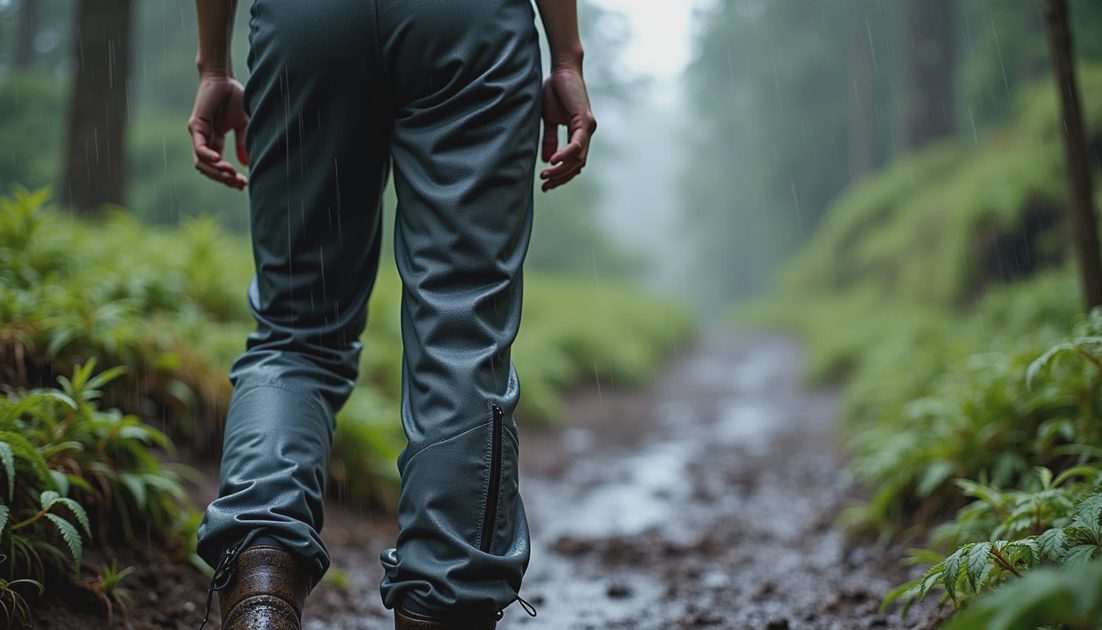
I have a complicated relationship with rain pants. I know I should carry them. I know they're the difference between a miserable, wet-leg hike and something approaching comfort. But every pair I've owned has found a way to disappoint me. Either they're too sweaty to hike in, too stiff to move in, or they wet through after an hour of real rain and I wonder why I carried them at all.
So I decided to settle the question properly: pick one pair, wear them for 40 miles of actual wet-weather hiking across multiple trips, and document exactly what fails first. No lab tests. No "I wore these around the block in a drizzle." Just real miles, real rain, real results.
The victim-slash-contender: Outdoor Research Foray II Pants ($135) . I chose these because they're widely available, well-reviewed, and sit at what I'd call the "serious beginner" price point — not budget-bin, not Gore-Tex Pro summit gear. The kind of pants a real person might actually buy.
Here's what happened.
The Specs (For Reference)
Model: Outdoor Research Foray II Pants
Price: $135
Material: AscentShell 3L (OR's proprietary electrospun membrane)
Weight: 11.3 oz (men's medium; women's similar)
Features: Full-length side zips, elastic waist with drawcord, articulated knees, zippered hand pockets, lower leg cinch
Claim: Waterproof, breathable, fully seam-taped
Mile 0–10: Point Reyes, Light to Moderate Rain, 54°F
First test was a 10-mile loop on the Sky Trail at Point Reyes. Conditions: steady light-to-moderate rain for about six of the ten miles, 54°F, moderate wind, mud in the low sections, wet grass everywhere else.
I started with the Foray IIs pulled on over a pair of Fjällräven Keb trousers — not my usual rain pants layering strategy (usually I go over a base layer only), but I wanted to see how the pants handled bulk underneath. The elastic waistband accommodated the extra fabric without cutting in. The full-length side zips made it easy to put them on over boots without sitting down on a wet log.
Hours 1–3: The first thing I noticed was breathability — specifically, the lack of it. The AscentShell membrane is billed as more breathable than traditional Gore-Tex, and maybe it is, in a lab. But hiking uphill in 54°F rain, I was generating more heat than the membrane could vent. By mile four, my legs felt clammy inside. Not soaked — the rain wasn't getting in — but the interior was humid, and my Keb trousers underneath were lightly damp from trapped sweat.
Hours 4–6: The DWR (Durable Water Repellent) coating on the face fabric started to show its limits. Water stopped beading on the fabric and began to wet the outer surface. This is normal — DWR isn't permanent, and any rain pant will eventually wet out on the face. But the AscentShell membrane underneath was still holding, keeping actual rain from getting through to my inner layers. The pants felt wet on the outside but dry on the inside.
The side zips, however, were a problem. By mile six, I noticed a cold sensation along my right thigh. The full-length side zip had a gap at the top closure — not a hole, but a spot where the zipper garage didn't fully seal. In sustained rain, water worked its way through that gap and slowly dampened my thigh. It wasn't a catastrophic leak, but after six miles of steady rain, my right leg was noticeably wetter than my left.
Mile 0–10 verdict: Breathability was worse than expected for a "breathable" membrane. The side zip leakage was annoying but not trip-ending. The DWR wore off faster than I expected on the thigh area where my arms swing against the fabric while hiking.
Mile 10–20: Olympic Peninsula, Heavy Rain, 48°F
Second test was a three-day trip in the Olympic Peninsula rainforest — one of the wettest places in the contiguous U.S. Conditions: heavy rain, 48°F, stream crossings, mud that came up to my ankles, and that particular Pacific Northwest dampness that gets into everything. I logged about 10 miles in the rain pants across two days of hiking.
The good news: In heavy, sustained rain, the AscentShell membrane did its job. For the first four hours of day one, my legs stayed dry from rain even as the face fabric completely wetted out. The pants looked saturated — dark, heavy with moisture — but the interior was dry to the touch. The seam taping held up. No leaks at the crotch, knees, or seat.
The bad news: That side zip gap problem got worse. In heavy rain, the leak at the top of the right zipper became a real issue. By the end of day one, I had a wet patch the size of a dinner plate on my right upper thigh. It wasn't from sweat — the rest of my leg was dry. It was a direct leak through the zipper closure.
I tried to fix it: adjusted the snap closure at the top of the zip, pulled the drawcord tighter, repositioned the pants higher on my waist. None of it completely solved the issue. The zipper garage simply didn't seal well enough for sustained heavy rain.
The other bad news: The lower leg cinch. The Foray II has a small plastic snap at the ankle to cinch the pants tight around your boot. It's a nice idea — keeps mud and water from splashing up the leg. But the snap on my right leg popped open repeatedly while hiking through wet brush. Every 15-20 minutes, I'd look down and see the bottom of the pant leg flapping open, mud already working its way up the inner cuff. I re-snapped it. It popped open again. After two hours, I gave up and tucked the pant leg into my boot top, which worked but looked ridiculous and created a gap where water could get in from above.
Mile 10–20 verdict: The membrane works. The zipper design doesn't. The ankle cinch is under-designed for actual use. At this point, I started researching other rain pants while sitting in my tent.
Mile 20–30: Los Padres National Forest, On-and-Off Rain, 52°F
Third test was a weekend trip in Los Padres, with conditions that were more annoying than dangerous: intermittent rain, 52°F, periods of sun between showers, and several creek crossings where rain pants were overkill but I wore them anyway to test.
The DWR was gone by now. After about 15-20 miles of total use, the face fabric had zero water repellency left. Water didn't bead at all — it soaked into the outer fabric instantly. This made the pants feel heavier and colder, even though the membrane was still blocking actual water penetration.
Chafing emerged as a new problem. On a 6-mile day with rain on and off, I wore the pants for about four hours straight. By mile three, I noticed friction along my inner thighs — the articulated knee design created excess fabric in the crotch area, and that fabric bunched and rubbed during long strides. It wasn't a blister-level problem, but it was uncomfortable enough that I stopped twice to adjust and eventually took the pants off when the rain paused.
The zipper situation got worse. The left leg zipper — which had been fine in previous tests — started to catch about two inches from the top. Not a full jam, but it required some careful maneuvering to get it all the way up. The teeth were fine. The issue was in the zipper track, which seemed to narrow slightly at the top.
Mile 20–30 verdict: The DWR was completely gone after 20 miles. The chafing was new and unwelcome. The left zipper was starting its decline. The membrane was still waterproof — the only piece of the pants that hadn't degraded.
Mile 30–40: Mount Tamalpais, Steady Rain, 46°F
Final test was a 10-mile day on Mount Tamalpais: steady rain, 46°F, wind gusts up to 25 mph on the exposed sections, and heavy wet coastal fog on the descent. This was the make-or-break test. I already knew what was failing. I wanted to see how bad it would get.
The zippers failed completely on both legs. The right zipper — the one with the gap problem — now let water through along the entire top third. Not just a gap at the closure, but seepage along the track itself. The left zipper jammed two inches from the top and refused to close fully, leaving a small opening that rain found immediately. I hiked the last three miles with both side zips partially open, rain working its way in, accepting my fate.
The ankle snaps were useless. Both left and right ankle cinches had failed by this point — they wouldn't stay closed for more than a few minutes of walking. I'd given up and was just tucking the pants into my boots. Mud had worked up into the inner cuff on both legs.
The membrane, incredibly, was still waterproof. The AscentShell 3L material in the main body of the pants — the seat, the knees, the lower legs — was still blocking rain. I could see water beading on the inside of the fabric where it had leaked through the zippers, but the membrane itself had not failed. If Outdoor Research made these pants without side zips, they'd be excellent.
Mile 30–40 verdict: The side zips are a design failure. The ankle cinch is a design failure. The membrane is a success. Three out of five critical components failed before 40 miles. The other two (waistband, main body) were fine. But a rain pant that lets water in through its own zippers is a rain pant that doesn't work.
The Damage Summary: What Failed and When
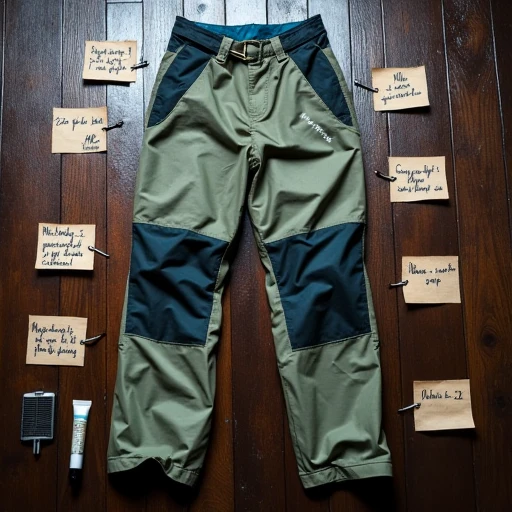
Component | Mileage at First Failure | Failure Mode | Severity |
|---|---|---|---|
DWR coating | Mile 6 | Wetted out on thighs and seat | Minor (expected wear) |
Right side zip closure | Mile 6 | Gap at top allows water ingress | Moderate, became severe |
Ankle cinch snap | Mile 12 | Repeatedly pops open | Moderate |
Inner thigh chafing | Mile 24 | Excess fabric bunching | Minor to moderate |
Left side zip | Mile 28 | Jams near top, won't fully close | Severe |
Right side zip track | Mile 34 | Seepage along full upper third | Severe |
AscentShell membrane | Did not fail | Still waterproof at 40 miles | N/A |
Seam taping | Did not fail | No peeling or leaking | N/A |
Waistband | Did not fail | Still functional, no stretching | N/A |
What This Says About Rain Pants Design
The Foray II's failure pattern isn't unique to Outdoor Research. It's a case study in how rain gear fails: not usually at the membrane or the seams, but at the interruptions — the zippers, the closures, the snaps, the places where the waterproof fabric has to stop being continuous to accommodate something else.
Every zipper is a potential leak. Every snap is a future failure point. The more "features" a rain pant has — side zips, ankle cinches, pocket zippers — the more places water can get in. The ultralight philosophy of "carry the simplest thing that works" applies here: a pull-on rain pant with an elastic waist and no zippers would have performed better in my testing because there would have been fewer things to fail.
The ironies are stacked: the Foray II's signature feature — full-length side zips for easy on-and-off — is exactly what made them fail as rain pants. The membrane did its job for 40 miles. The zippers didn't make it past six.
Who These Are For (And Who They're Not)
Buy the OR Foray II if:
You mostly hike in light, intermittent rain where the zipper leaks won't be exposed
You value the convenience of full-length side zips above absolute waterproofing
You need rain pants that go on and off over boots easily
You're willing to treat the DWR regularly and accept zipper limitations
Don't buy these if:
You hike in sustained heavy rain (the zippers will leak)
You want waterproof pants that stay fully waterproof for more than a season
You're active in wet brush or off-trail conditions (the ankle cinch will drive you crazy)
You're on a budget and expect durability to match the $135 price
What I'd Buy Instead
If I were doing it again — and I will be — here's what I'd buy at three price points.
Budget: Frogg Toggs Ultra-Lite2 Rain Pants
These are the disposable rain pants thru-hikers have used for years. They're basically coated polypropylene.
They don’t breathe at all, they look like a trash bag, and they’ll probably tear eventually. But they have no zippers to leak, they weigh 4 ounces, and they cost $15.
For occasional use in real rain, they might be the most honest rain pant on the market. When they fail, you buy another pair and you're still $120 under the Foray II.
Mid-range: REI Co-op Rainier Rain Pants ($70)
REI's in-house option uses a 2.5-layer waterproof-breathable membrane, has ankle zips instead of full-length side zips (fewer failure points), and weighs about the same as the Foray II at 10 ounces. The ankle zips are short enough that water ingress through them is minimal. At nearly half the price, they're a more honest value proposition.
Splurge: Arc'teryx Beta SL Rain Pants
If you want side zips that don’t leak, Arc'teryx uses watertight zippers on their high-end shells — not standard coil zips with a storm flap, but actual sealed zippers.
The Beta SL uses Gore-Tex with a C-KNIT backer that’s genuinely more breathable than the Foray II’s Ascent Shell. At nearly $300, these are an investment. But if you're in rain often enough to justify them, they'll outlast and out-perform the mid-range options.
I haven't done a 40-mile torture test on these yet. When I do, I'll report back.
The Bottom Line
40 miles in the Outdoor Research Foray II Pants taught me that waterproof membranes work, and everything attached to them doesn't. The AscentShell material and seam taping held up perfectly. The zippers, ankle cinch, and DWR coating all failed in ways that compromised the pants' function well before the membrane gave out.
If you're considering the Foray IIs, know what you're signing up for: a well-made membrane let down by zipper design and ankle closures that weren't tested rigorously enough for the real world. They'll keep you dry in light, intermittent rain. They'll leak through the zippers in sustained heavy rain. For $135, that's not good enough.
Rain pants should do one thing: keep rain out. If they can't do that because of their own features, the features need to be redesigned.
Gear up. Get out. Check your zippers.
No comments yet — be the first to share a thought.