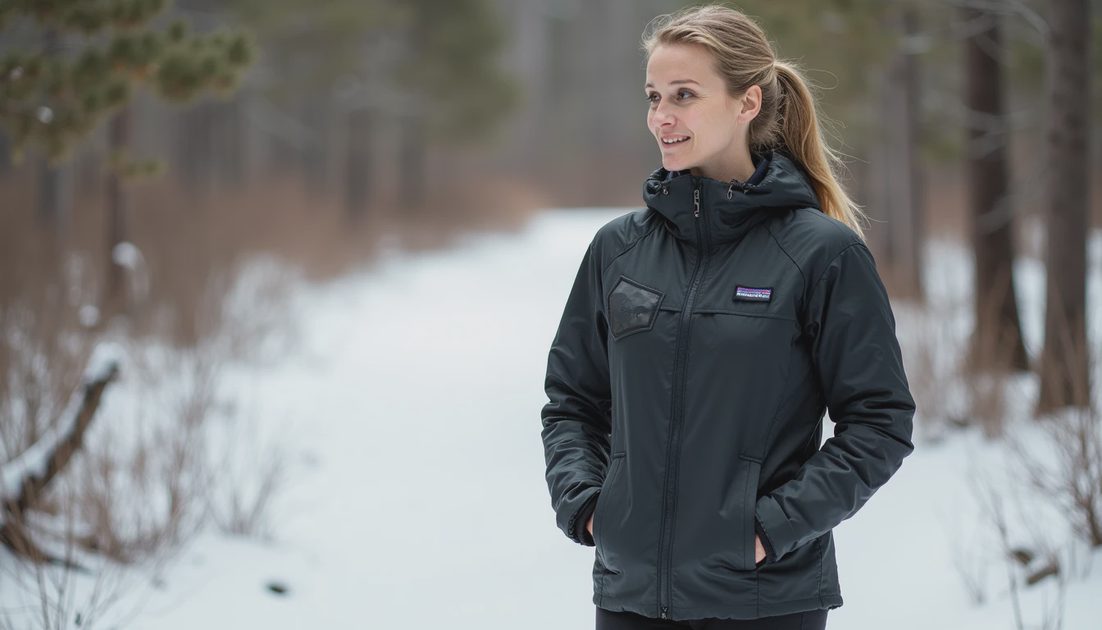
I bought the Patagonia Nano Puff Hoody in November 2023, three days before a trip to the Eastern Sierra where the forecast said 28°F and I owned nothing between a fleece and a heavy down parka. I walked into REI, tried on four puffy jackets, and picked the Nano Puff because it fit under my shell without bunching at the armpits. I paid $299. I didn't overthink it.
Three winters later, it's been to the Sierra, the Olympics, the Lost Coast, and approximately 127 coffee shops. It has melted sleeve cuffs from a campfire spark, a patch of duct tape on the left shoulder where I snagged it on a manzanita branch, and a DWR coating that needs reapplication for the third time. It's still the jacket I grab most often when the temperature drops below 50°F. But after three years of real use, I can see exactly where it excels, where it's aging, and whether I'd buy it again.
Here's the long-term report.
The Specs (For Reference)
Model: Patagonia Nano Puff Hoody (women's)
Price: 299(current retail;Ipaid299(current retail;Ipaid 299 in 2023)
Insulation: 60g PrimaLoft Gold Insulation Eco (100% post-consumer recycled polyester)
Shell fabric: 100% recycled polyester ripstop with DWR finish
Weight: 10.8 oz (women's medium)
Features: Two zippered hand pockets, internal chest pocket (doubles as stuff sack), adjustable hem, elasticized cuffs, non-helmet-compatible hood
Made in: Vietnam (Fair Trade Certified sewn)
Year One (2023–2024): The Honeymoon Phase
The first winter, I wore the Nano Puff everywhere. It was my "cold morning at the trailhead" jacket, my "sitting around camp at 8,000 feet" jacket, my "walking the dog in 40°F fog" jacket. I also wore it to grocery stores, breweries, and once to a work meeting where someone asked if I was going skiing afterward.
Warmth out of the box: With a merino base layer and a fleece underneath, I was comfortable sitting still at 32°F. Moving — hiking uphill with a pack — I'd overheat above 45°F and have to take it off. This is normal for any insulated jacket. The Nano Puff is a static warmth piece. It's not for high-output activity unless it's genuinely cold.
The DWR worked. Light rain and mist beaded for the first three months. By month four, the shoulders — where rain hits first — were wetting out. This is standard DWR lifespan for a jacket that sees regular use. I reapplied Nikwax SoftShell Proof in February 2024 and the beading returned.
No durability issues in year one. No snags, no zipper problems, no insulation migration. The ripstop face fabric proved surprisingly resistant to brush and granite scrapes. One small scuff on the sleeve from a rock, purely cosmetic.
Year one verdict: Loved it. Wore it constantly. No complaints.
Year Two (2024–2025): The First Signs of Aging
By the second winter, the Nano Puff had become a known quantity. I understood what it was good at and what it wasn't. I also started noticing the first signs of wear.
Insulation compression. Synthetic insulation loses loft over time — it's the tradeoff for synthetic's moisture resilience versus down's longevity. By the end of year two, I estimated the Nano Puff had lost about 15-20% of its original loft. The jacket felt slightly thinner, especially in high-compression areas: the lower back (where I sit against chairs and car seats), the inner elbows, and the shoulders (from backpack straps).
This translated to a real warmth reduction. Sitting still at 35°F with the same base layer and fleece, I now felt a slight chill that I hadn't felt the first year. The jacket was still warm — warmer than any fleece — but it was no longer the "solid to freezing" piece it had been. I'd peg the revised comfort limit at around 38-40°F stationary.
The campfire incident. In November 2024, a campfire spark landed on my right sleeve cuff. The ripstop polyester melted instantly — a small hole, about the size of a pencil eraser, right at the cuff edge. The insulation didn't escape, but the hole was visible. I covered it with a square of black Tenacious Tape, and the repair has held for over a year. But it was a reminder: synthetic insulation may handle moisture better than down, but the face fabric is not fire-resistant. Campfire embers melt through this jacket like butter.
Zipper smoothness. The main zipper started to catch slightly at the chest level — not jamming, but requiring a two-handed operation in the last few inches. A little zipper lubricant fixed it temporarily, but it's returned. The hand pocket zippers remained smooth.
Year two verdict: Still my most-worn jacket, but the loft loss was noticeable. The repaired cuff was a personal reminder that campfire + synthetic shell = hole.
Year Three (2025–2026): Where It Stands Now
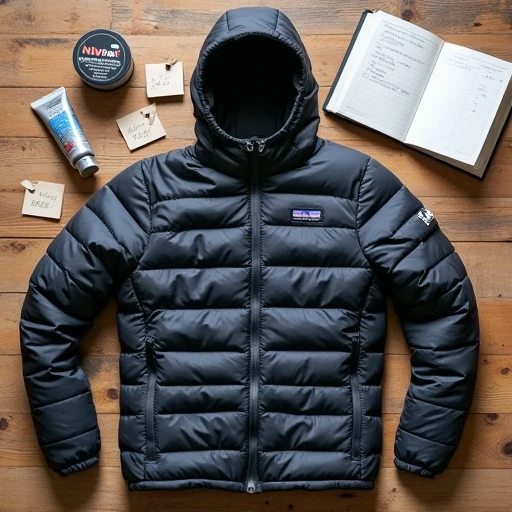
Three winters in, I've worn this jacket an estimated 250-300 days. It's no longer in the honeymoon phase. It's in the "reliable old friend who's showing their age" phase.
Current loft: I'd estimate 60-65% of original loft remains. The jacket is visibly thinner in the torso compared to a new Nano Puff off the rack. The arms still retain decent loft — less compression there — but the body has thinned noticeably. I now treat the Nano Puff as a 45°F-and-above static piece, or a 35°F piece when layered aggressively.
DWR status: I've reapplied DWR three times now. The factory treatment lasted about three months. Each aftermarket treatment has lasted roughly nine months. The current DWR is functional — light rain beads — but sustained rain will wet out the shoulders within 20-30 minutes. This is expected for a non-waterproof jacket. I don't rely on the Nano Puff for wet conditions without a shell over it.
The duct tape patch. The Tenacious Tape on the left shoulder (manzanita snag) has held perfectly. The tape on the right cuff (campfire hole) has needed replacement once. The edges of the tape curl slightly over time, but a clean cut and reapplication fixed it. The repairs are visible but functional. The jacket looks like it's been used, which it has.
What hasn't failed:
Seams: All seam stitching is intact. No loose threads, no separation.
Zipper pulls: Still attached, still functional. The main zip catch is annoying but not a failure.
Elastic cuffs: Still stretchy, still seal around the wrist. No bagging out.
Hood adjustment: The single-pull hem adjustment works. The hood still fits over a beanie.
Pockets: No holes, no lining separation. The internal stuff sack pocket still works.
Year three verdict: The Nano Puff is aging like a synthetic jacket ages — gradually losing loft, holding up structurally, remaining functional at a reduced level of performance. It's not dead. It's not even close to dead. But it's no longer the jacket it was at year one.
What the Nano Puff Does Best (And What It Doesn't)
After three winters, the strengths and weaknesses of this jacket are clear.
What it excels at:
Packability. It stuffs into its own chest pocket and disappears. I've taken it on trips where I wasn't sure I'd need insulation, and at the size of a Nalgene, it never felt like a burden.
Moisture resilience. I've worn it in mist, fog, and light rain, and even when the face fabric wets out, the PrimaLoft insulation keeps warming. Down would have collapsed. The Nano Puff kept me comfortable. This is the single strongest argument for synthetic over down.
Layering. The trim fit and smooth face fabric mean it slides under a shell without resistance. No bunching, no friction. It's the best midlayer puffy I've owned for shell compatibility.
Weight-to-warmth ratio (new). At 10.8 ounces, the original warmth was impressive. Even with loft loss, it's lighter than any fleece of equivalent warmth.
What it's mediocre at:
Long-term loft retention. Synthetic insulation degrades faster than down. This is a known tradeoff. If you prioritize longevity over moisture performance, down is better.
Wind resistance. The ripstop shell blocks light wind but gusts cut through. In windy conditions, the Nano Puff needs a shell over it to retain heat.
Breathability. It doesn't breathe. Wearing it during any activity above a brisk walk at 40°F will overheat you. This is normal for a puffy, but it limits the jacket's versatility.
What it's bad at:
Fire resistance. The face fabric melts. Campfire sparks leave permanent holes. If fireside camping is your thing, consider a down jacket with a thicker face fabric, or just be careful. I learned this the hard way.
Sustained rain. It's not waterproof. Don't treat it like it is.
How to Extend the Life of a Synthetic Puffy
If you've bought a Nano Puff or are considering one, here's what I've learned about keeping it alive.
Wash it correctly. Synthetic insulation needs washing to restore loft. Use a front-loading washer (top loaders with an agitator can tear the fabric), cold water, gentle cycle, and a technical wash detergent like Nikwax Tech Wash or Grangers Performance Wash. Tumble dry on low heat with clean tennis balls or dryer balls. The balls break up clumps of insulation and help restore loft. Wash every 15-20 wears if you sweat in it. Once a season minimum.
Reapply DWR when it wets out. If water stops beading, it's time. Nikwax SoftShell Proof is my go-to. Wash the jacket first, apply the DWR treatment while it's still damp, and dry according to the instructions. It takes 30 minutes and adds months of performance.
Repair holes immediately. Small tears become big tears if you ignore them. Tenacious Tape (black, 3-inch roll) costs $8 and fixes holes permanently. Clean the area with alcohol, cut a patch slightly larger than the hole, round the corners (prevents peeling), and press firmly. The repair will outlast the jacket.
Store it uncompressed. Don't leave the Nano Puff stuffed in its pocket for months. Long-term compression accelerates loft loss. Hang it or fold it loosely when you're not using it.
Would I Buy It Again?
After three winters, the answer is yes — with a caveat.
If I were buying a synthetic puffy today for three-season backpacking and everyday use, I'd still choose the Nano Puff over the competition. The fit is better than the REI competitor. The weight-to-warmth ratio is better than the Arc'teryx Atom (which is more of an active midlayer anyway). The price, at $299, is fair for a jacket that lasts 3-5 winters of regular use.
But I wouldn't buy it for the same reason I bought it the first time — "I need a warm jacket and I need it now." I'd buy it knowing exactly what it is: a lightweight, packable, moisture-resilient synthetic puffy that will lose loft over time and need repair eventually. It's not a lifetime piece. It's a high-performance piece with a limited lifespan, and that's okay if you know it going in.
What I'd tell someone buying their first puffy:
If you hike in wet conditions (Pacific Northwest, coastal, mist, fog, rain), buy synthetic (Nano Puff or similar). It'll keep you warm when damp.
If you hike in dry conditions and prioritize longevity, buy down (Patagonia Down Sweater or Feathered Friends Eos). It'll last longer and pack smaller.
If you sit around campfires regularly, buy down with a thicker shell. The Nano Puff melts.
Alternatives Worth Considering
Patagonia Down Sweater ($279): Warmer, longer lasting, more packable. Worse in wet conditions. If you hike mostly in dry weather, this might be the better Patagonia puffy for you.
Arc'teryx Atom LT Hoody ($280): More breathable, better for active use, less warm when stationary, face fabric looks less technical. Reviewed elsewhere on this site. Better for hiking; worse for camp.
**REI Co-op 650 Down Hoodie ($129):** Half the price, down insulation, heavier and bulkier, less refined fit. If $299 is a stretch, this is the budget puffy that actually works.
Rab Xenair Alpine ($225): Synthetic insulation with body-mapped breathability — warmer in the core, more breathable in the sides. Closer to an active midlayer than a static puffy. Good if you run cold while moving.
The Bottom Line
The Patagonia Nano Puff Hoody after three winters: still warm, still packable, still the jacket I reach for when the temperature drops and I don't know exactly what the weather will do. It's lost loft — maybe 35-40% from new — but it hasn't lost its utility. It has a melted cuff and a taped shoulder and it looks like it's been used because it has.
For $299, I've worn it roughly 275 days. That's $1.09 per wear, and dropping. By any gear-value metric, that's a win.
It's not the warmest jacket. It's not the lightest. It's not the most durable. But it's the right balance of attributes for three-season use in variable conditions, and after three winters, it's still in my pack.
Would I buy it again? Already planning to — when this one finally gives up in another year or two.
Gear up. Get out. (And keep your sleeves away from the campfire.)

No comments yet — be the first to share a thought.