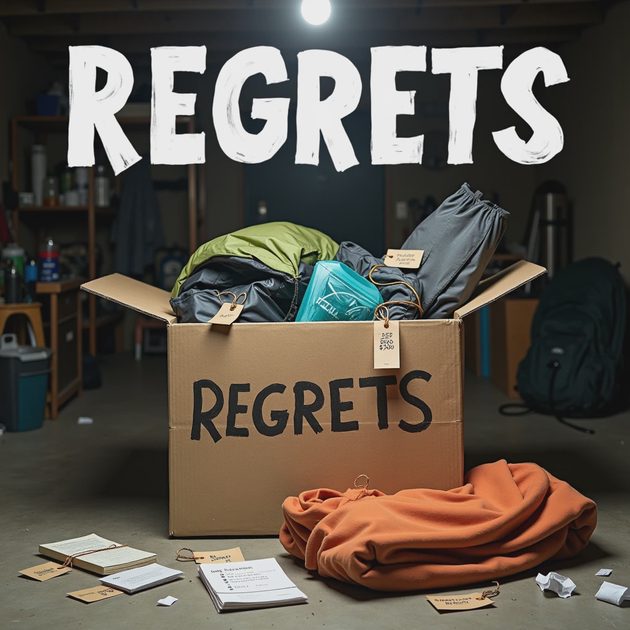
Most gear reviews tell you what to buy. This one tells you what I wish I hadn't.
I've been buying and testing outdoor gear for over a decade. Some of it has earned a permanent spot in my pack. Some of it has failed spectacularly. But the category I never see anyone write about is the gear that wasn't bad — just wrong. Wrong for me, wrong for the conditions I actually hike in, wrong for the person I actually am versus the person I imagined I'd be when I clicked "add to cart."
These are the pieces I regret buying. Not because they're terrible products. Because I bought them for the wrong reasons — and spent real money learning lessons that I'm writing down so you don't have to.
Regret 1: The $600 Ultralight Tent I Wasn't Ready For
What I bought: Zpacks Duplex (699 at that time,now $749)
The pitch: A two-person Dyneema tent that weighs 19 ounces. The holy grail of ultralight shelters. Every PCT thru-hiker on YouTube had one. Every r/Ultralight thread recommended it. I was hiking 8–12 mile weekends in Los Padres, carrying a 4-pound REI Half Dome, and I convinced myself that cutting 3 pounds off my pack would transform my experience.
What actually happened: I used it three times.
The first time, I pitched it in my backyard and felt accomplished. The second time, I took it on an overnight in Point Reyes. It was breezy — maybe 15 mph gusts — and the tent sounded like a trash bag in a hurricane all night. I didn't sleep. The third time, I brought it to the Sierra in July. The mosquitoes were thick enough to hear through the fabric. The Duplex has no floor — just a bathtub groundsheet that clips to the mesh. The mosquitoes found gaps near the corners, and I spent the night swatting insects in the dark while the tent crinkled in the wind.
The lesson: Ultralight gear is for ultralight conditions and ultralight skills. I was a weekend backpacker who valued sleep and bug protection more than I valued cutting 3 pounds. The tent wasn't bad. It was wrong for me. I replaced it with a Big Agnes Copper Spur HV UL2 ($550, 3 lbs) — heavier, yes, but with a floor that keeps bugs out and fabric that doesn't sound like a chip bag in the wind. I've used it 40+ nights since and never regretted the weight.
What I should have asked before buying: "What do I actually care about at camp?" The answer was sleep and bug protection. The Duplex failed both. The weight savings were real, but the comfort tradeoffs were worse.
Regret 2: The Down Jacket I Bought for Conditions I Never Hike In
What I bought: Feathered Friends Eos Down Jacket ($379, 10.6 oz, 900+ fill)
The pitch: The warmest down jacket for its weight. A cult favorite among mountaineers and winter backpackers. I read five reviews calling it "the best down jacket money can buy." I bought it in November, convinced I'd need it for cold Sierra nights.
What actually happened: I wore it exactly four times in two years.
The problem wasn't the jacket. The Feathered Friends Eos is genuinely excellent — warm, light, beautifully made. The problem was that I don't hike in conditions where a 900-fill down jacket is the right tool. Most of my trips are three-season California hikes where night time lows are 35°F–45°F. For those conditions, my fleece + wind shell combination is warm enough, more breathable for active use, and doesn't need to be babied around moisture.
The Eos was too warm for hiking, too delicate for me to relax in around a campfire, and too expensive to justify keeping for the one winter trip I might take each year. It sat in my gear closet with the tags still on for six months.
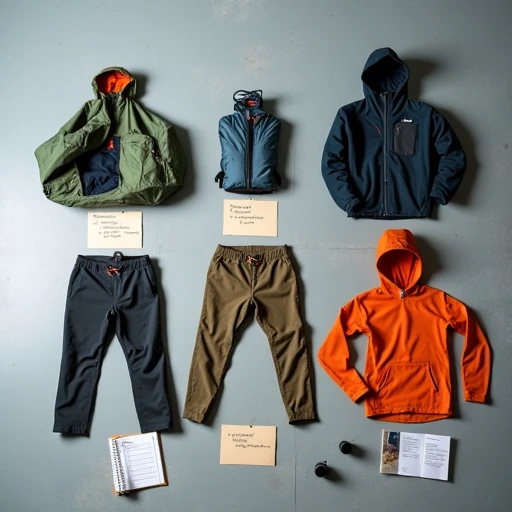
The lesson: Buy gear for the conditions you actually hike in, not the conditions you imagine you might hike in someday. I bought a jacket for a version of myself — the winter mountaineer who bivvies at 12,000 feet — who doesn't exist. The hiker I actually am needs a synthetic puffy at most, and even then, only for camp. I use a Patagonia Micro Puff ($299) now, which handles damp conditions better and doesn't make me nervous around a campfire. I wear it more in one month than I wore the Eos in two years.
What I should have asked before buying: "What trip am I actually taking next month?" Not "what trip might I take someday?" The answer to the first question would have told me I didn't need it.
Regret 3: The "Do-Everything" Softshell Pants That Did Nothing Well
What I bought: Prana Stretch Zion Pants ($95)
The pitch: The most versatile outdoor pant ever made. Hiking, climbing, travel, casual wear. Every "best hiking pants" list recommended them. I bought a pair in "Mud" brown in 2020.
What actually happened: I wore them for about 20 hikes before I admitted I didn't like them.
The Stretch Zion has a built-in belt, an articulated knee, and a gusseted crotch. On paper, it's exactly what I want. In practice, the fabric was the problem. The Stretch Zion material is thick, heavy, and slow to dry. On a warm hike, my legs felt like they were in a sauna. On a creek crossing, the pants soaked up water and stayed wet for hours. The DWR wore off after about ten wears, and once it did, the pants held moisture like a sponge.
The fit was also off — the waist ran large, the legs ran long, and the built-in belt created a bunch at the waistband that dug in under a pack hip belt. I kept adjusting them. Every hike, I was pulling them up, tightening the belt, loosening the belt, rolling the cuffs. They demanded attention in a way that good gear never should.
I still have them. They're in a drawer. I wear them for casual dog walks sometimes. Net loss: $95 (because I haven't bothered to sell them).
The lesson: A garment that claims to do everything usually does nothing well. The Stretch Zion is fine at a lot of things — hiking, climbing, casual wear — but excellent at none. I replaced them with dedicated hiking pants (REI Co-op Sahara, and dedicated casual pants (Fjällräven Keb, $45) — specialized pieces that cost more combined but each do their job better.
What I should have asked before buying: "What's the one thing I need these pants to do best?" The answer was "hike comfortably in warm weather." The Stretch Zion failed that test. Everything else it offered was irrelevant.
Regret 4: The Hydration Bladder I Thought Would Change My Life
What I bought: CamelBak Crux 3L Reservoir ($38)
The pitch: Drink water without stopping. Stay hydrated hands-free. Sip while you hike. Everyone uses these.
What actually happened: I used it exactly twice before I wanted to throw it off a cliff.
Filling a bladder inside a packed backpack is a pain. You have to pull everything out to reach the sleeve. Cleaning it requires a special brush and drying rack, and if you don't dry it completely, mold grows in the tube. The water tastes like plastic for the first ten uses. The bite valve drips on your shirt. The tube bounces against your chest and freezes in cold weather.
But the real dealbreaker: you can't see how much water you have left without pulling the bladder out of your pack. Mid-hike hydration management — "should I chug or ration?" — is impossible when you can't see the water level. With bottles, I always know. With a bladder, I'm guessing.
I gave it to a friend who runs marathons. Net loss: $38.
The lesson: Just because something is popular doesn't mean it fits how you hike. I prefer two SmartWater bottles in my side pockets. I can see the water level, I can refill one while still having the other, I can add electrolyte tablets without contaminating the whole reservoir, and I never have to clean mold out of a tube. The bladder wasn't bad. It was solving a problem I didn't have — I don't need to sip water with every step. I'm fine stopping for 30 seconds to grab a bottle.
What I should have asked before buying: "How do I actually drink water on trail right now, and what's wrong with that?" Nothing was wrong with it. I was fixing a system that wasn't broken because a product category existed that made me think I should.
Regret 5: The "Backup" Shell I Bought Because It Was On Sale
What I bought: Marmot Minimalist Gore-Tex Jacket
The pitch: A genuine Gore-Tex shell at nearly half off. Paclite membrane, 14 oz, a reliable brand. I already owned an Arc'teryx Beta LT, but the Marmot was "such a good deal" and "nice to have a backup."
What actually happened: The Marmot stayed in my gear closet for 14 months with the tags on.
I already had a shell that worked. The Beta LT was lighter, had pit zips (the Marmot doesn't), and fit me better. The Marmot was redundant from the moment I bought it. I didn't need a backup shell — I needed to not buy a second shell when I already had a perfectly good one.
I sold it on GearTrade for 80.Netloss:80.Netloss:39.
The lesson: A sale price isn't a reason to buy gear. The question isn't "is this a good deal?" The question is "do I need this at all?" I confused "good price" with "smart purchase." The cheapest gear is the gear you don't buy. The second cheapest is the gear you already own.
What I should have asked before buying: "Does this fill a gap in my kit, or am I just excited about the discount?" It didn't. I was.
Regret 6: The Merino Hoodie I Bought for the Color
What I bought: Icebreaker Quantum III Hoodie ($220)
The pitch: A merino-blend technical hoodie in a limited-edition "Rust" colorway. I saw it on Instagram. The color was gorgeous — a burnt orange that looked like a Sierra sunset. I convinced myself I needed a heavier merino hoodie for shoulder-season layers.
What actually happened: I wore it three times before I admitted I hated how it felt.
The Quantum III is 240gsm merino with a nylon core for durability. It's warm, but it's heavy. The hood is bulky. The fabric is dense and doesn't breathe as well as my lighter fleece layers. And while the "Rust" color was beautiful in product photos, in real life it clashed with everything else I owned.
I still have this one. It's at the back of my closet. I pull it out once every few months, put it on, remember why I don't wear it, and put it back. Net loss: $220 (my most expensive regret).
The lesson: Never buy gear for the color. Buy gear for the function. If the function isn't right, the color doesn't matter. The Quantum III is a good hoodie for someone who needs a heavy merino midlayer. That person isn't me. I bought a product photo, not a product.
What I should have asked before buying: "Do I actually need a heavy merino hoodie, or do I just like how this one looks?" The honest answer is the second one. $220 is a lot to pay for a color.
The Patterns: What All My Regrets Have in Common
Looking back at six pieces of regretted gear, the patterns are obvious:
1. I bought for an imaginary version of myself.
The ultralight tent, the down jacket — both were for a hiker I wanted to be, not the hiker I actually was. The imaginary hiker thru-hikes the PCT and bivvies on snowy peaks. The real hiker does weekend trips in California and values sleep over weight savings.
2. I bought because of marketing, not need.
The hydration bladder, the backup shell, the merino hoodie — none of these filled an actual gap in my kit. I bought them because I saw them in reviews, on Instagram, on Reddit shakedowns. I was solving problems I didn't have with products I'd been told I needed.
3. I confused "good gear" with "good gear for me."
The Feathered Friends Eos is an excellent jacket. The Zpacks Duplex is an excellent tent for the right person. The Stretch Zion pants work for thousands of hikers. I wasn't wrong about the quality. I was wrong about the fit — between the gear and my actual life.
The Questions I Ask Before Buying Gear Now
After $691 in total losses (items sold at a discount or still sitting unused), I changed how I evaluate gear before buying. Here's the checklist:
1. What specific trip am I taking in the next 30 days that requires this?
If I can't name a real, on-the-calendar trip, I don't buy it. "Someday" is not a trip. "Maybe next winter" is not a trip. "The PCT in 2028" is not a trip when it's 2026 and I haven't requested the time off.
2. What's wrong with what I'm using now?
If nothing is wrong, I don't need to fix it. This question alone would have prevented the hydration bladder, the backup shell, and the merino hoodie.
3. Am I buying the solution to a problem I actually have — or the solution to a problem a review told me I should have?
Marketing creates problems so products can solve them. "Dehydrated because you don't sip continuously?" That's a problem a bladder solves. But was I dehydrated before the bladder existed? No. I was drinking from bottles and feeling fine.
4. If this goes on sale for 50% off next week, would I still buy it today?
If the answer is no, I'm not buying the product. I'm buying the discount.
The Gear I Don't Regret (For Reference)
Since this entire post is about mistakes, let me briefly name the gear that has never made me feel foolish:
Arc'teryx Beta LT shell — Three years, zero failures, pit zips, fits me perfectly. I'd replace it tomorrow if I lost it.
Patagonia Better Sweater fleece — The one that goes from trail to coffee shop without complaint. Six months of regular use, light pilling, still my most-worn layer.
Big Agnes Copper Spur HV UL2 — The tent I bought after selling the Duplex. 40+ nights, no leaks, no tears, no regrets.
SmartWater bottles (2, 1L each) — 4total.Replaceda4total.Replaceda38 hydration bladder. Never going back.
Darn Tough socks — I own four pairs. The oldest has 400+ miles and one hole from a campfire ember. Lifetime warranty means the hole isn't a problem.
Every one of these passes the "bought for real me, for real trips, to solve real problems" test.
The Bottom Line
I've wasted $691 on gear I didn't need, bought for conditions I don't hike in, sold at a loss, or still have sitting unworn in my closet. That number doesn't include shipping, tax, or the time I spent researching and reselling.
The money matters. But the bigger cost is the mental clutter — the gear that takes up space in your closet and your head, the stuff you feel guilty about not using, the version of yourself you thought you'd be when you clicked "add to cart."
Good gear isn't just well-made. It's well-chosen. It matches your actual life, your actual trips, your actual needs. Everything else is a donation to the outdoor industry's marketing budget.
Buy less. Buy for who you are. Skip the imaginary hiker. He doesn't exist, and he doesn't need a $600 tent.
Gear up. Get out. (With less stuff than last year.)

No comments yet — be the first to share a thought.