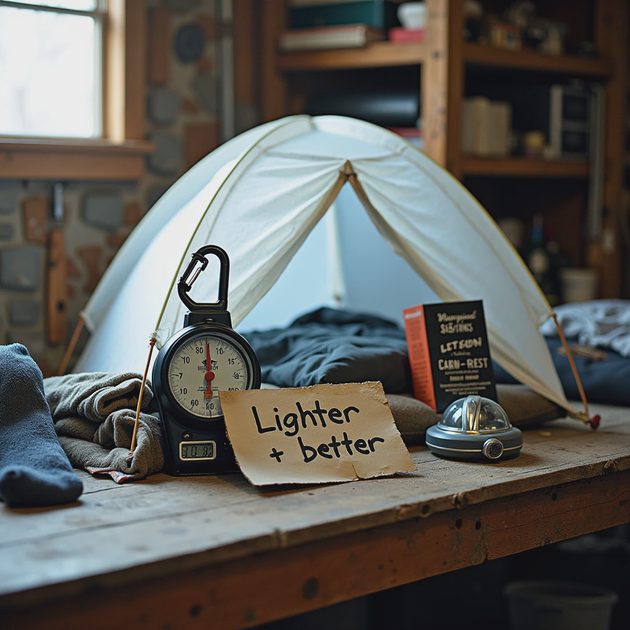
I have a friend — let's call him Dave — who owns a $600 Dyneema tent. It weighs 14 ounces. It requires eight stakes to pitch, has no floor, and in any wind over 15 mph, it sounds like a trash bag in a hurricane. Dave has used it three times. Once in his backyard. Twice on a trip where he bailed after one night because he couldn't sleep through the crinkling.
Dave is not an ultralight backpacker. Dave goes on four weekend trips a year and carries a camp chair. But someone on YouTube convinced him that lighter gear would make him happier, faster, and more legitimate as an outdoor person. So he bought the tent, and now it lives in his garage, because every time he plans a trip, he remembers he hates sleeping in a crinkly floorless sack.
Dave is not the problem. Dave is the victim of an industry that has spent the last decade convincing regular hikers that if their base weight is over 12 pounds, they're doing it wrong.
This is the anti-ultralight rant I've been holding in for five years.
The Ultralight Gospel: A Quick Summary
For anyone who's missed the sermon, here's the ultralight doctrine in its purest form:
Your base weight (everything except food, water, and fuel) should be under 10 pounds. Ideally under 8. The truly devout aim for 5.
Every gram counts. Cut the handle off your toothbrush. Remove the labels from your clothing. Drill holes in your spoon. Yes, people actually do this.
Frameless packs, tarp shelters, cold-soaked food, and sleeping pads the thickness of a yoga mat are all considered acceptable tradeoffs for the holy number on the scale.
Anyone carrying more than 15 pounds base weight is a "traditionalist" — and in ultralight circles, that word is said the way you'd say "unvaccinated."
The philosophy itself is not wrong. Efficiency is good. Unnecessary weight is unnecessary. But somewhere around 2018, ultralight stopped being a tool for specific kinds of trips and became a status system — a way to signal that you were a serious outdoor person, not a weekend car-camper who doesn't know what Dyneema is.
The Three Lies Ultralight Marketing Tells You
Lie 1: Lighter Gear Will Make You Happier
The pitch is simple: lighter pack = less fatigue = more miles = more joy. The math is clean. The lived experience is anything but.
What ultralight marketing doesn't show you: the person at camp at 6 p.m., sitting on a folded piece of foam the size of a pizza box, eating cold soaked lentils from a Ziploc bag, wrapped in a quilt that's rated to 30°F but feels more like 42°F because they bought the "aggressive" temperature rating to save 3 ounces. They're not happier. They're lighter, colder, and hungry for actual food.
Comfort matters. Sleep matters. Warm food at the end of a 16-mile day matters. For most of us, a good night's sleep in a tent that doesn't flap like a distressed bird adds more to the experience than shaving off 8 ounces. You feel the extra weight on your back for 8 hours. You feel the bad sleep and cold dinner for the remaining 16.
Lie 2: Ultralight Gear Is Just As Durable
This one is mathematically untrue, and everyone in the industry knows it. Dyneema Composite Fabric (DCF) is strong for its weight. It's not strong compared to 70-denier nylon. A 15-denier ripstop rain jacket will wet out faster and tear sooner than a 40-denier jacket. A titanium pot the thickness of aluminum foil will dent if you look at it wrong.
Ultralight gear is designed with a tradeoff: durability for weight. That tradeoff makes sense if you're hiking 2,600 miles on the Pacific Crest Trail, where every ounce adds up over five months, and you're willing to baby your gear because your life depends on it. But if you're a weekend warrior doing 15 miles on the Skyline-to-the-Sea trail, that same tradeoff is just a shorter lifespan for your gear. You'll replace that ultralight stuff in two seasons. The heavier, more durable version would have lasted five.
Lie 3: Ultralight Is The Only "Correct" Way To Hike
This is the one that actually makes me angry. There's a vocal minority in the outdoor community — mostly on Reddit, mostly on r/Ultralight — that treats base weight as a moral failing. They post "shakedowns" where strangers critique each other's gear lists, and the comments are brutal: "Why do you need a pillow?" "Three pairs of socks? Are you hiking or running a laundromat?" "You could save 4 ounces by switching to a quilt." The word "need" is applied with surgical precision to other people's comfort.
Here's the thing: hiking is not a competition. There's no podium at the trailhead. Nobody is weighing your pack at the summit. Your base weight does not appear on your tombstone. The only metric that matters is whether you're comfortable, safe, and enjoying yourself. If that means carrying a 2-pound camp chair because your back hurts after 10 miles and sitting on a log makes you miserable, carry the chair. I carry the chair sometimes. I'm not sorry.
Who Ultralight Actually Makes Sense For
Before I go further, let me be fair. Ultralight gear and philosophy absolutely have a place. They're just for a specific type of person and trip.
Ultralight makes sense if:
You're thru-hiking. Any trail over 500 miles. The cumulative effect of weight over months is real, and durability matters less when you're willing to replace gear mid-trail.
You have a joint condition or chronic injury where every pound genuinely increases pain or risk.
You're fastpacking, trail running, or doing FKT (Fastest Known Time) attempts where speed is the point.
You've tried it and genuinely prefer the minimalism. Some people love the puzzle of reducing weight. That's a valid hobby. Just don't call it a moral imperative.
Ultralight doesn't make sense if:
You're a weekend backpacker doing 10-20 miles per trip.
You car camp and day hike from a base camp.
You value camp comfort over on-trail speed.
You're new to backpacking and still figuring out what works for you.
You're on a budget. Ultralight gear is expensive, and the money-to-weight-saved ratio gets absurd. Your 600DCFtentsaves12ouncesovera600DCFtentsaves12ouncesovera250 Big Agnes. That's $350 for three-quarters of a pound.
The Gear You Actually Need (And What Ultralight Tells You To Cut)
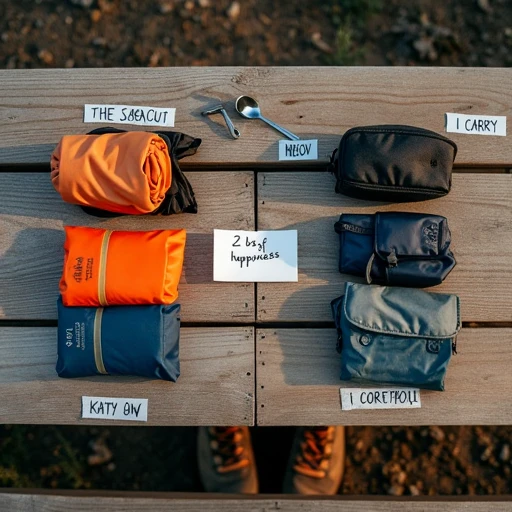
Here's a list of items that ultralight orthodoxy will tell you to ditch — and why I still carry most of them.
A tent with a floor.
Ultralight gospel: Use a tarp or a floorless pyramid tent. Save 8-12 ounces.
Reality: I have camped in the Sierra in July. The mosquitoes were thick enough that I could hear the hum from inside my fully enclosed tent. If I'd been under a tarp, I would have been eaten alive. Carry the floor. The floor is good.
A sleeping bag rated 10 degrees warmer than the forecast low.
Ultralight gospel: Buy a 30°F quilt, wear all your layers to sleep, and save 6 ounces.
Reality: I've slept in a 20°F bag in 22°F weather and was exactly comfortable — not warm, not cold, but right on the edge. If the forecast had been wrong by 5 degrees, I would have been shivering all night. Temperature ratings are survival ratings, not comfort ratings. Give yourself a buffer. Sleep is worth the weight.
A camp stove.
Ultralight gospel: Cold-soak your food. No stove, no fuel, no pot. Save a pound.
Reality: I have tried cold-soaked ramen. It's not food. It's punishment. A hot meal and a hot coffee at the end of a 15-mile day is one of the great pleasures of backpacking. My stove, pot, and fuel weigh 11 ounces total. That's less than a can of beer. I'll carry it every time.
A camp chair or a sit pad thicker than 1/8 inch.
Ultralight gospel: Sit on your bear canister. Sit on a folded piece of foam. Sit on the ground. You're camping, not at a furniture showroom.
Reality: After 14 miles with 3,000 feet of gain, my body wants actual support. I carry a Sea to Summit Aeros pillow (2.8 oz) and a Therm-a-Rest Z-Seat (2 oz). Together they add 4.8 ounces and transform my camp comfort. The weight penalty is less than a Snickers bar.
A spare pair of socks.
Ultralight gospel: Two pairs total — one worn, one drying. Three is excess.
Reality: I carry two spare pairs. Blisters end trips. Wet feet cause blisters. Dry socks at lunch and dry socks at camp are the cheapest insurance policy in backpacking. The extra pair weighs 2.5 ounces.
Total weight of my "ultralight heresies": roughly 2 pounds.
And I enjoy every trip more because of them.
The Industry's Role In This
Outdoor brands are not stupid. They noticed that ultralight gear carries higher price tags and inspires cult-like loyalty. A $600 DCF tent has a better margin than a $250 nylon tent. A $350 950-fill down jacket has a better margin than a $200 800-fill jacket. The math works in the industry's favor: sell less material, charge more money, frame it as "innovation."
Meanwhile, gear review sites and YouTubers feed the cycle. "Best Ultralight Tents of 2026" gets clicks. "Reasonably Light Tents That Won't Fall Apart After Two Seasons" doesn't. The algorithm rewards extremes. Nuance doesn't trend.
The result is a market where the most visible, most-reviewed, most-recommended gear is designed for the top 5% of users — thru-hikers, speed demons, and weight-obsessives — while the remaining 95% of backpackers get the message that they're doing it wrong if they don't buy the same stuff.
A Better Way To Think About Weight
I'm not anti-lightweight. I'm anti-dogma. Here's how I think about gear weight instead.
Comfort is the metric. Not grams.
The right base weight is the one that lets you hike your intended distance without pain and sleep well enough to do it again the next day. For me, with my body and my fitness and my terrain, that's about 18 pounds. For you, it might be 14. It might be 22. The number is irrelevant. The outcome is everything.
Durability is a form of lightness.
Gear that fails early is gear you have to replace. Replacement costs money, time, and the environmental impact of manufacturing another product. Buying a slightly heavier, more durable piece of gear often means you buy fewer pieces of gear over a lifetime. That's lighter on your wallet and lighter on the planet.
Cost is weight too.
An ultralight kit costs $2,000 minimum, and easily $3,500 if you're buying new. That's a lot of money to save 5 pounds over a standard lightweight kit that costs $800. For most people, the $1,200 difference would buy several actual plane tickets to actual trailheads. Experiences outweigh ounces.
Start heavy, then cut.
The best way to find your ideal pack weight is to start with too much, go on a trip, and note exactly what you didn't use. Then leave those items behind next time. Do this for a year. You'll arrive at a personalized gear list based on your actual needs, not a stranger's spreadsheet. The ultralight approach — start with nothing and add only what you "need" — works if you already know what you need. Most beginners don't.
The Bottom Line
Ultralight backpacking is a valid niche. It's not a universal upgrade. The industry has blurred the difference.
If you're thru-hiking the PCT, go ultralight. If you're doing two nights in Los Padres and want to enjoy your camp, bring the tent with a floor, the stove you actually like, the extra pair of socks, and the pillow you'll actually sleep on.
The goal isn't a number on a spreadsheet. The goal is a weekend where you come back tired and happy instead of tired and miserable. Lighter doesn't automatically mean better. It just means lighter.
Stop buying gear for the hiker you think you should be. Buy gear for the hikes you actually take.
Gear up. Get out. Carry what you need.

No comments yet — be the first to share a thought.