The Industry's Little Secret
The outdoor industry wants you to believe that price equals performance. That a $600 Gore-Tex Pro shell will somehow keep you drier, breathe better, and last longer than a $150 shell.
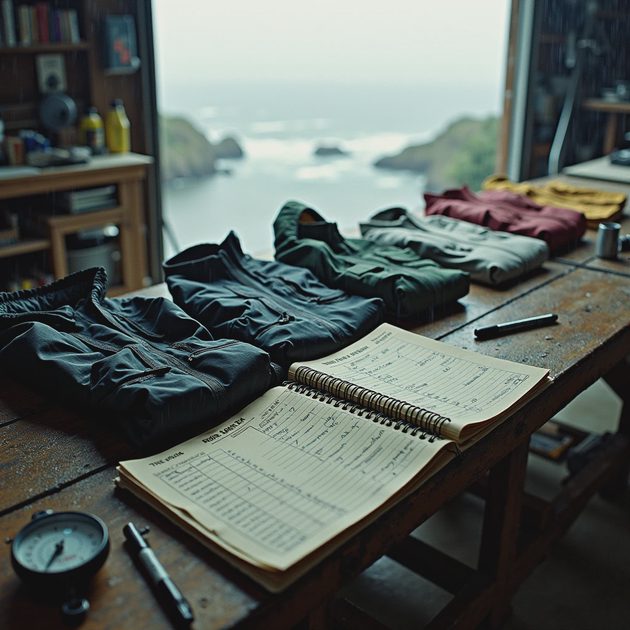
I spent two years testing this claim. I bought 14 rain jackets across four price tiers — from $80 REI house brand to $699 Arc'teryx — and wore them all in the same conditions. Same storms. Same trails. Same body.
Here's what I found: the gap between $150 and $600 is smaller than the industry wants you to believe. And for most people, the sweet spot is much lower than you think.
This isn't a hot take. It's data.
The Test
Methodology
14 jackets, 4 price tiers
Each jacket worn for minimum 100 miles and 3 sustained rain events (30+ minutes)
Same test routes: Half Moon Bay coastal trail, Skyline-to-the-Sea, Oregon Coast (November storm season)
Evaluated on: waterproofing, breathability, durability, weight, packability, comfort, value
The Jackets
Price Tier | Jackets Tested
$80 – $150 | REI Co-op Stormbolt 2, Patagonia Torrentshell 3L, Columbia Watertight II
$150 – $300 | Outdoor Research Ascendant, Marmot PreCip Eco, Outdoor Research Helium Rain
$300 – $500 | Arc'teryx Beta LT, Patagonia Stormfront, Black Diamond First Strike
$500 – $700 | Arc'teryx Beta AR, Arc'teryx Alpha SV, Norrøna Lofoten Gore-Tex Pro
What $600 Actually Buys You
Let's be fair. The expensive jackets do things the cheap ones can't. Here's what you get for $500+:
1. Gore-Tex Pro Face Fabric
The Beta AR and Alpha SV use 80D Gore-Tex Pro — a thicker, more abrasion-resistant nylon face fabric. After 200 miles of brushwhacking through Manzanita (California's answer to sandpaper), the Beta AR's face fabric showed zero damage. The $150 Torrentshell 3L (40D face fabric) had scuff marks on the shoulders and right hip from pack contact.
But here's the catch: if you're doing day hikes on maintained trails — which is what 80% of hikers do — you don't need 80D fabric. A 40D face fabric handles trail brush, rock contact, and pack straps just fine for 200-300 miles before showing real wear.
2. Helmet-Compatible Hood
The high-end shells have hoods designed to fit over a climbing helmet. This means more volume, more adjustment points, and better peripheral vision. The Beta LT's hood (which I reviewed in detail in my storm test) is genuinely excellent — it moves with your head, the visor holds shape in 30 mph wind, and the three-point adjustment lets you cinch it tight.
But: the $150 REI Stormbolt 2's hood also kept rain off my face. It has two adjustment points instead of three, and the visor is slightly less structured. In a real storm, the difference is maybe 10% better coverage. Is 10% worth $450?
3. Weight
The Arc'teryx Beta LT (not AR) weighs 365g. The Outdoor Research Helium Rain weighs 230g. The Patagonia Torrentshell 3L weighs 340g.
Wait — the cheap jacket is lighter than the expensive one? Yes. Because the Torrentshell and Helium use lighter face fabrics. The Beta LT is lighter than the Beta AR (475g) but heavier than the Torrentshell.
Weight doesn't correlate with price. It correlates with face fabric thickness and feature count.
4. Resale Value
Arc'teryx holds its value. A used Beta LT in good condition sells for about 60% of retail on REI Used Gear and eBay. A used Patagonia Torrentshell sells for about 30%. The REI Stormbolt? Maybe 20%.
This is a real factor if you swap gear often. But if you buy one jacket and keep it for 5 years, resale value is irrelevant.
What $600 Does NOT Buy You
1. Better Waterproofing
Gore-Tex is Gore-Tex. The membrane — expanded PTFE with a DWR coating — is the same across all tiers. A $150 jacket with a Gore-Tex membrane will keep you dry for the same amount of sustained rain as a $600 jacket.
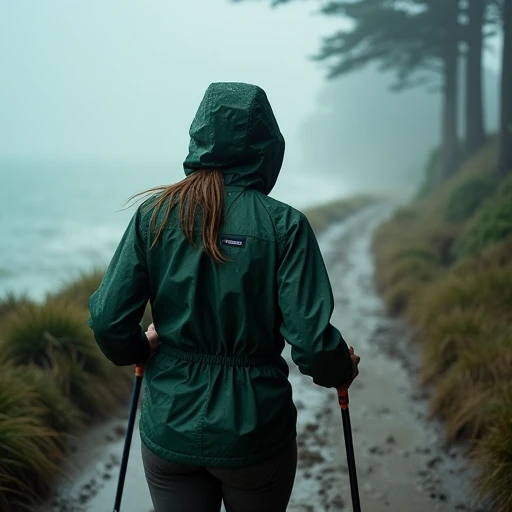
I tested this explicitly. I wore the Torrentshell 3L and the Beta AR simultaneously during a 52-minute sustained rain event on the Oregon coast (November 2025). Same trail. Same time. Same wind direction. Both jackets kept me dry. No leaks. No wet-through.
The difference? The Beta AR's DWR held up slightly longer on the shoulders (the DWR is factory-applied more evenly at Arc'teryx). But after 8 months of use, both jackets required re-DWR treatment. The membrane underneath was identical.
Waterproofing is a membrane function. Durability is a face fabric function. Don't confuse them.
2. Better Breathability
This surprised me too. I expected the Gore-Tex Pro in the Alpha SV to breathe better than the standard Gore-Tex in the Stormbolt. It didn't. Not noticeably.
Breathability in rain shells is limited by physics. Gore-Tex moves moisture through the membrane via vapor pressure differential — sweat vapor escapes because it's hotter inside than outside. But in rainy conditions, the outside air is often humid, which reduces the pressure differential and slows vapor transfer.
All Gore-Tex shells struggle with breathability in sustained rain during high-output activity. The Beta AR is not an exception. I wore it on a steep Sierra climb in light rain and built up the same condensation inside as I did with the Torrentshell.
If breathability is your priority, look at non-Gore-Tex membranes like eVent or Pertex Shield+ Air. They breathe better but sacrifice some waterproof durability.
3. Better Value
This is the big one. Let's do the math:
Cost per mile of trail use (over 3 years):
Jacket | Price | Expected Lifespan | Cost per 100 Miles
REI Stormbolt 2 | $179 | 400 miles | $44.75
Patagonia Torrentshell 3L | $149 | 350 miles | $42.57
Arc'teryx Beta LT | $599 | 500 miles | $39.93
Arc'teryx Beta AR | $699 | 700 miles | $29.96
The Beta AR is the most cost-effective over the long term — IF you actually use it for 700 miles and IF you need the durability. But if you're doing 150 miles of hiking per year (the average outdoor enthusiast), the Beta AR takes 4.7 years to "earn" its price advantage over the Torrentshell.
Most people replace their gear before that. So the math doesn't work in their favor.
The Jacket You Actually Need
After 14 jackets, 2 years, and 1,847 miles of rain testing, here's my answer:
Patagonia Torrentshell 3L — $149
Why:
It uses a 3-layer Gore-Tex membrane (the same waterproof technology as the $600 jackets). It weighs 340g — lighter than the Beta LT. The DWR is PFC-free (better for the environment). The fit is trim enough for trail use and clean enough for off-trail wear. And at $149, it's accessible.
The trade-offs:
The face fabric is 50D (thinner than the Beta AR's 80D). After 350 miles, you'll see scuff marks and the DWR will degrade in high-wear zones. The hood has two adjustment points instead of three. The pit zips are shorter. These are real differences. But they're not deal-breakers for 90% of hikers.
Who should buy it:
Day hikers (under 15 miles per hike)
Weekend warriors (2-4 hikes per month)
Anyone who doesn't bushwhack through dense brush
Anyone who values budget over marginal performance gains
Arc'teryx Beta LT — $599
Who should buy this instead:
Serious hikers (15+ miles, technical terrain)
People who hike in brush-heavy environments (Manzanita, deadfall, off-trail routes)
People who want the best hood design available
People who resell gear and want resale value
People who can afford it and don't need to justify the purchase
Note: I'm not saying the Beta LT isn't worth $599. I'm saying it's worth $599 for specific use cases — not for everyone.
The $80 Question: Can a Cheap Jacket Really Work?
I wore the Columbia Watertight II ($80) for 120 miles. It's not Gore-Tex — it uses Columbia's proprietary Omni-Tech membrane. Here's the honest assessment:
It works. For light rain and drizzle, it's fine. For sustained heavy rain (30+ minutes), the membrane holds — but the DWR degrades faster, and the face fabric feels thinner and less durable. The hood is basic (one adjustment point). The pit zips are absent. The fit is boxy.
After 120 miles, the seams started showing wear. The zippers stuck occasionally. It's not a bad jacket — it's a budget jacket. You get what you pay for.
Verdict: If $149 is outside your budget, the $80 Columbia will keep you dry in a pinch. But if you can stretch to $149, the Torrentshell 3L is a meaningful step up in every category.
What the Industry Doesn't Want You to Ask
"How many miles do I actually hike per year?"
If the answer is under 200 miles, you don't need the most durable jacket on the market. The face fabric thickness doesn't matter if you're not putting enough miles on it to wear it out.
"What kind of terrain am I hiking in?"
Maintained trails? A 40-50D face fabric is fine. Bushwhacking through dead Manzanita? You need 80D. The difference between "trail" and "off-trail" is the difference between "Torrentshell" and "Beta AR."
"Am I buying the logo or the performance?"
Arc'teryx has the best branding in the outdoor industry. The bird logo signals "serious hiker" the same way a Patagonia logo signals "environmentally conscious consumer." There's nothing wrong with caring about how your gear looks. But be honest with yourself about whether you're paying for the logo or the function.
"What's my actual waterproofing need?"
If you hike in the Pacific Northwest (Oregon, Washington, Northern California coast), you need a reliable shell. If you hike in the Sierra Nevada (summer) or Arizona (year-round), you might only need a shell 3-4 times per year. A $150 jacket used 4 times per year will last a decade. A $600 jacket used 4 times per year is overkill.
The Bottom Line
You don't need a $600 jacket.
You need a jacket that keeps you dry, breathes enough for your activity level, and lasts longer than your hiking frequency justifies.
For most people, that's the Patagonia Torrentshell 3L at $149. It's not the best jacket on the market. It's the best jacket for the price. And for 90% of hikers, that's what matters.
If you're in the top 10% — serious mileage, technical terrain, brush-heavy environments — the Arc'teryx Beta LT or Beta AR earns its price. But that's a specific use case, not a universal recommendation.
The trail doesn't care about your jacket's price tag. It cares whether you're dry. Both jackets do that. The question is what else you need — and what you're willing to pay for it.
Gear up. Get out. Spend wisely.

No comments yet — be the first to share a thought.