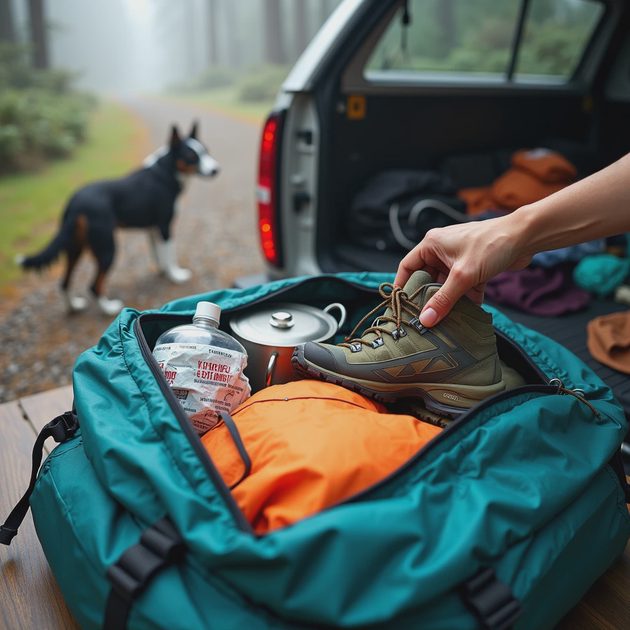
I have a rule for backcountry weekends: if I can't explain why it's in my pack in one sentence, it stays home.
That rule took years to develop. My first overnight trip — Point Reyes, 2016 — I carried a full-size camp pillow, a paperback book, three pairs of jeans (why?), and a cast-iron skillet. My pack weighed 47 pounds. I made it four miles before I sat down on a log and seriously considered abandoning the skillet in the chaparral.
I've gotten lighter since then. Not ultralight — I'm not counting grams or cutting the handle off my toothbrush — but intentional. Everything earns its place. Here's exactly what I pack for a standard weekend in the backcountry: Friday afternoon to Sunday afternoon, temperatures between 35°F and 65°F, Sierra Nevada or Los Padres terrain. Two nights, roughly 15–25 miles total.
And, just as important, what I left behind — and why.
The Full Packing List
The Pack Itself
Osprey Kyte 46 (women's specific)
I've used the Kyte for three seasons now. 46 liters is the sweet spot for me — big enough for a bear canister and two nights of food, small enough that I can't overpack even if I try. The suspended mesh back panel is the real reason I keep it; I run hot on climbs, and that air gap between my spine and the pack body prevents the dreaded back-sweat-soaked-shirt situation.
Weight (empty): 3.5 lbs. Could I go lighter? Yes. Do I care? Not enough to lose the frame and ventilation.
Shelter & Sleep System
Tent: Big Agnes Copper Spur HV UL2
I carry a two-person tent even when I'm solo. The extra pound buys me space to spread out, bring Barnaby when he comes, and wait out thunderstorms without pressing my sleeping bag against wet tent walls. The Copper Spur has held up through Sierra hail, unexpected snow, and one very memorable night of 40-mph winds on an exposed ridge near Mammoth. The poles didn't snap. I was impressed.
Why I don't use a tarp or bivy: I've tried. On a clear, bug-free night in August, a tarp is fine. On a buggy July evening in Emigrant Wilderness, I lasted 45 minutes before I was wrapped head-to-toe in my rain jacket, sweating and swearing. I accepted that I'm a tent person.
Sleeping bag: Feathered Friends Swallow UL 20
This is the most expensive single piece of gear I own. It's also the one I'd replace without hesitation if I lost it. Rated to 20°F, 850+ fill down, 2 lbs even. I've taken it down to 22°F wearing base layers and a beanie and slept fine. The differential cut means the down lofts fully instead of compressing at the shoulders, which is a detail I didn't appreciate until I borrowed a friend's cheaper bag and woke up with cold spots every time I turned over.
Sleeping pad: Therm-a-Rest NeoAir XLite (women's version, R-value 5.4)
Higher R-value than the men's version, which matters when the ground is frozen or snow-covered. I side-sleep (see: my entire life), and the horizontal baffles on this pad mean my hip doesn't bottom out on granite. It's crinkly — the thing sounds like a potato chip bag when I roll over — but I've learned to tune it out. Earplugs help.
Pillow: Sea to Summit Aeros Premium (regular)
My one luxury that survived the weight cuts. I tried the "stuff your puffy in a stuff sack" method for two years. My neck never forgave me. The Aeros packs down to the size of a lime, weighs 2.8 oz, and gives me actual cervical spine alignment. Worth every gram.
Kitchen & Water
Stove: MSR PocketRocket 2 + Toaks 750ml titanium pot
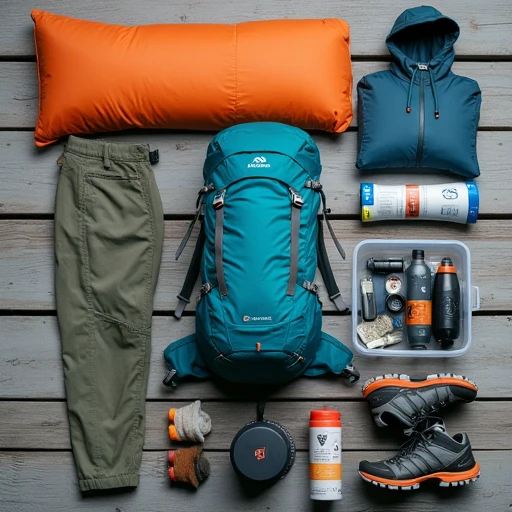
Boiling water. That's all I need. I don't cook elaborate backcountry meals — I rehydrate, I pour hot water into pouches, I make coffee. The PocketRocket 2 weighs 2.6 oz, nests inside the Toaks pot along with a mini Bic lighter and a bandana, and boils two cups of water in under three minutes. For one person, this is enough.
What I left behind: The frying pan, the French press, the "backcountry oven."
I once carried a GSI Outdoors frying pan so I could make backcountry pancakes. The pancakes burned. The pan weighed 10 oz. I ate cold tortillas with peanut butter and admitted defeat. The French press attachment? Now I use Starbucks VIA instant. It's not my pour-over at home, but it's hot, it's coffee, and it doesn't require cleaning grounds out of a mesh filter while crouched in the dirt.
Water filtration: Sawyer Squeeze
Not the Mini, not the Micro. The full-size Squeeze. The Mini clogs too fast, and the Micro's flow rate drops after a few trips. I screw the Squeeze onto a SmartWater bottle (the threads match perfectly — a PCT trick) and drink straight from it. No squeezing bags unless I'm filtering for the pot.
Water storage: 2 SmartWater bottles (1L each) + 2L CNOC Vecto bladder for camp
The Vecto rolls up to nothing when empty and opens wide at the top for scooping from shallow sources. At camp, I fill it once and have water for dinner, breakfast, and the first few miles of the next day without another trip to the stream.
Clothing (Worn + Packed)
The system: one set of hiking clothes, one set of camp clothes, layers for everything in between.
Hiking:
Patagonia Capilene Cool Daily sun hoody — Long sleeves keep the sun off, hood protects my neck without a separate buff, thumbholes prevent the wrist-sunburn gap between sleeve and glove. I've worn this thing for four summers and it doesn't smell, which is borderline miraculous.
Fjällräven Keb trousers — I know, I know. They're heavy. They're also the most durable pants I've ever worn, they stretch where I need stretch, and the vent zips on the thighs actually work — I open them on climbs and close them on ridges. I've bushwhacked through manzanita in these and come out without a scratch. Try that in leggings.
Darn Tough Hiker Micro Crew — One pair on my feet, one pair drying on my pack. I've written about these before; I'll just say I've got a pair with 400+ miles and the only hole is from a campfire ember, not wear.
Salomon X Ultra 4 GTX — 200+ miles in, sole starting to crack, still the most reliable boot for my wide feet. Non-waterproof in summer months; I go with the non-GTX version when I know I'm not dealing with snow or extended mud.
Camp:
Smartwool Merino 250 baselayer (top and bottom) — Sleep clothes that double as emergency layers. Merino doesn't hold odor, and the 250 weight is warm enough sitting still at 35°F with a puffy over it.
Darn Tough Mountaineering socks (extra thick) — Only for sleeping. Dry, warm, never worn while hiking. This is a non-negotiable for me: clean socks at the end of the day.
Patagonia Micro Puff hoody — 10 oz, synthetic insulation that still works when damp. I use this as my pillow stuff-sack trial failed (see above), but it's in my pack for camp warmth and unexpected stops.
Arc'teryx Beta LT shell — 12 oz, Gore-Tex, pit zips, lives in my pack whether the forecast says rain or not. The Sierra doesn't check the forecast.
Underwear: ExOfficio Give-N-Go 2.0 (2 pairs)
One worn, one washed-and-dried-in-rotation. The overnight underwear dryer trick: rinse in filtered water, wring in a camp towel, wear inside-out until the body heat dries them. Sounds feral. Works.
What I left behind: "Backup outfits," extra fleece, cotton anything.
Every extra layer is weight you carry. I don't need a second fleece — my puffy and shell cover any combination of cold and wind. And the cotton? I made the mistake of cotton underwear on a 14-mile day in 2020. The chafing was biblical. Cotton kills more slowly than hypothermia, but it still kills.
Food for Two Nights
Friday dinner: Dehydrated spaghetti bolognese (homemade) — ground beef, tomato paste, angel hair pasta, dried in a dehydrator, rehydrated in the pot.
Saturday breakfast: Oatmeal packet + a scoop of vanilla protein powder + a handful of dried blueberries + instant coffee.
Saturday lunch on trail: Tortilla + Justin's almond butter packet + honey packet + banana (eaten in the first 2 miles before it gets crushed).
Saturday dinner: Backcountry Pad Thai — ramen noodles, peanut butter powder, sriracha packet, crushed peanuts, dehydrated vegetables from the bulk bin, lime juice from those little plastic squeeze bottles.
Sunday breakfast: Same as Saturday. Predictable, I know. When I find something that works, I stick with it.
Snacks: Clif Bloks (margarita flavor — salt + carbs), a Ziploc of trail mix (almonds, dried mango, dark chocolate chips), one Kind bar for "emergency morale."
Coffee: 2 Starbucks VIA packets per day. Yes, four packets total. No, that's not negotiable.
Total food weight: ~4.5 lbs. Fits in a BV450 bear canister with room for toiletries.
Sundries & "The Drawer"
Everyone has a drawer in their pack — the small stuff that makes the difference between comfortable and miserable.
In a Ziploc (always):
Mini Bic lighter (always a spare; fire matters)
Tiny Swiss Army Knife (scissors > knife for most tasks)
Leukotape strips pre-cut on label backing (blister prevention that actually stays on — moleskin is a lie)
2 ibuprofen, 2 Benadryl (stings, allergic reactions), 4 Imodium (trust me)
Mini tube of Aquaphor (lips, cracked heels, chafing rescue)
1 compressed towel tablet — expands with water, serves as a washcloth
Sun/bugs:
Sunscreen stick (SPF 50, no leak mess in the pack)
Lip balm with SPF
Picaridin lotion (doesn't melt synthetic gear the way DEET does)
Hygiene:
Trowel (Deuce #2 — 0.6 oz, actually digs a proper cathole)
Toilet paper, packed in a separate Ziploc with a sanitation bag
Hand sanitizer (small dropper bottle, not the full pump)
Travel toothbrush (cut in half; I said I wasn't counting grams, but I also hate bulk)
Gear repair:
10 feet of duct tape wrapped around a trekking pole
1 needle + heavy-duty thread (used once — repaired a pack strap on day 2 of a 5-day trip)
2 spare D-rings (because buckles fail at the worst possible moment)
Tech
Headlamp: Black Diamond Spot 400. Red light mode preserves night vision and doesn't blind everyone at camp.
Navigation: Phone + Gaia GPS, in airplane mode, with maps downloaded ahead of time. I carry a paper map and compass as backup. I have never needed the compass. I still carry it, because the one time I don't will be the time my phone takes a swim at a river crossing.
Battery: Nitecore NB10000 (5.3 oz). One charge handles a full weekend of GPS, photos, and the occasional weather check from a ridgeline. No solar panels, no multi-battery setups — keep it simple.
The satellite communicator: Garmin inReach Mini 2. This is the heaviest "maybe I won't need it" item in my pack, and I carry it on every trip. It lets me text "camp here, all good" to my emergency contact, check weather, and summon help if something goes wrong. I have never used the SOS button. I hope I never do. I carry it anyway, because a weekend trip isn't worth my mother never getting a response.
What I Left Behind — And Why
1. The second pair of hiking shoes.
I once brought "camp shoes" — a pair of lightweight Chacos. Added 1.5 lbs and I wore them for maybe 45 minutes total. Now I loosen my boot laces at camp. That's the camp shoe. Free.
2. The full med kit.
I used to carry a pre-packed Adventure Medical Kit with 80 pieces, most of which I couldn't identify. Now I carry exactly what I know how to use. If I don't know how to use a tourniquet, carrying one isn't preparation — it's false confidence.
3. The journal and pen.
I thought I'd write profound thoughts under the stars. In reality, I'm too tired to write anything but "tired, feet hurt, good views" and my pen freezes in cold weather. The Notes app on my phone is fine.
4. The camera.
I'm not a photographer. I take photos with my phone. Carrying a dedicated camera body and lens for Instagram shots I'll never post is self-deception I've finally admitted.
5. The Bluetooth speaker.
Do not bring a speaker. No one on the trail wants to hear your playlist. Wear earbuds if you must — but honestly, listen to the wind. That's kind of the point.
6. The chair.
I sat on logs, rocks, my bear canister, and my folded sleeping pad for years before I admitted I didn't need a 2-lb camp chair. If I want a backrest, I lean against a tree. I'm not in my living room. I'm camping.
The Final Pack Weight
With food, water for the first stretch, and everything listed above: 26 lbs.
Without food and water (base weight): 18 lbs.
That's not ultralight. It's not heavy. It's what works for me — a pack I can carry comfortably for 15 miles, with every single item earning its place. I didn't get here overnight. I got here by carrying too much, suffering, learning, and cutting.
The best way to figure out what you need is to go out, carry too much, and come back knowing exactly what stayed in the pack the whole time. I can't give you your list — your comfort, your terrain, your tolerance for cold and discomfort will be different than mine. But I can tell you this: you need less than you think.
Start with the essentials. Add what you use. Cut what you don't.
Gear up. Get out.
No comments yet — be the first to share a thought.